
“What I need is the dandelion in the spring. The bright yellow that means rebirth instead of destruction. The promise that life can go on, no matter how bad our losses. That it can be good again.” Suzanne Collins, “Mockingjay”
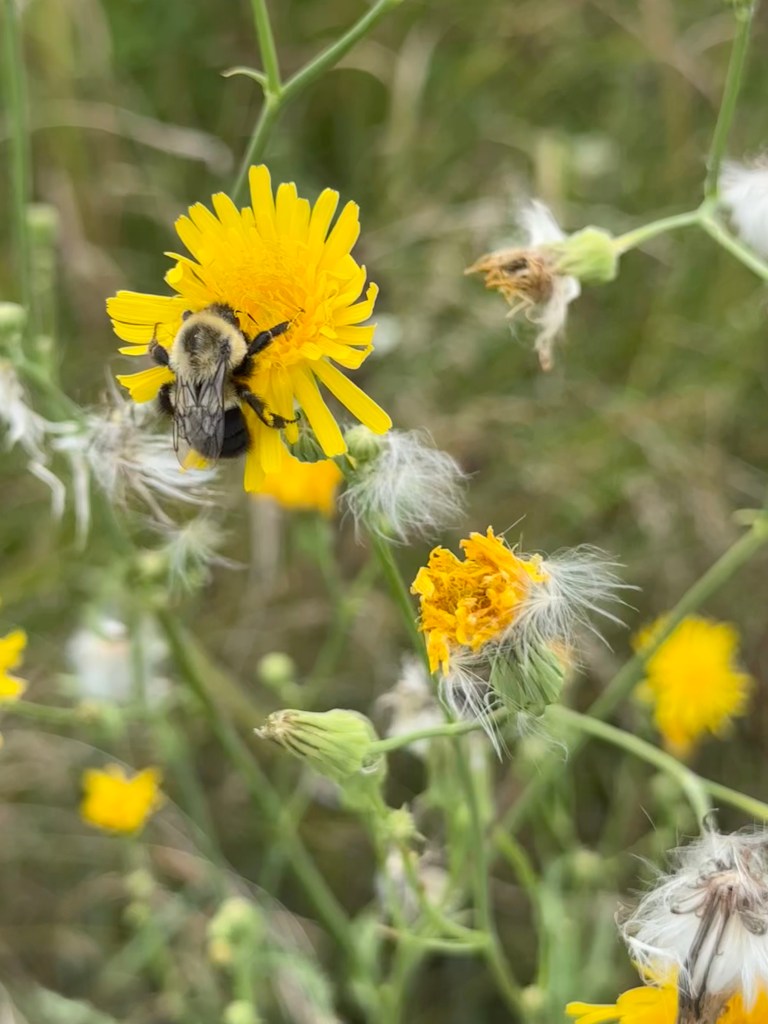
Charlotte, VT August 2025
Whoever is designing the course of study for my life needs to expand the program. I don’t think I can stand another lesson in grief—what it is, what to expect, and what to do to mitigate it when it arrives. I’ve taken the prerequisites, fulfilled the requirements, and completed the labs. Now it seems the little registrar in the sky has enrolled me in a graduate seminar. Frankly, this is not a subject I had any interest in mastering. It’s past time to decorate the mortarboard, shake hands with the dean, and get my diploma.
After all the lessons, I’ve come to understand that although grief is typically associated with the death of a loved one, it is so much more. My study of grief began with the death of my mother, followed nine months later by the passing of my husband. Losing a parent and my partner left a huge hole in my life. I can’t describe either loss; words feel inadequate. I reach for metaphors, but grief resists simplification. To truly understand it, it has to be experienced. Paradoxically, even when we are mourning together, the loss remains uniquely personal because each of us has our own relationship with who or what was lost.
Everyone experiences loss, sadness, and grief. We endure our individual hardships as well as our shared suffering.
During the COVID pandemic, the number of losses seemed to grow exponentially—people, events, opportunities, and even basic human interaction. As we endured the lockdown, we believed we would be changed by the experience and emerge kinder, more understanding, and compassionate. Perhaps, individually, we did. Yet here we are, less than half a dozen years later, tribal, mistrustful, and divided. Something larger is fraying too—our sense of connection, our trust in one another, even our confidence in the systems that hold us together. It’s hard not to feel some measure of loss in all of it.
When a slow eclipse of sadness threatens to darken the road ahead, one way I’ve found to light my path and move forward is to shift my focus from what is lost to what remains. Admittedly, some days that’s easier said than done, but the goal remains nevertheless.
“I’ve found that there is always some beauty left — in nature, sunshine, freedom, in yourself; these can all help you.” Anne Frank
Years ago, while visiting a friend, I noticed a layer of slightly burned cookies sitting atop her trash. She had scraped the entire pan of cookies with scorched bottoms and dark brown edges into the bin. As any cookie aficionado or novice baker can attest, slightly burned cookies might not be eaten first, but they will indeed be eaten. Sometimes it’s easy to eat around the brown bits. Other times, it might be necessary to employ the sharp-knife-scraping-the-back technique. Oh, there is definitely a sense of disappointment and loss when the expectation of an aesthetically pleasing culinary delight is dashed. However, as a cookie addict, I can report that, in most circumstances, what remains is still worth the calories. Perfection may be lost, but a few bites of deliciousness abides.
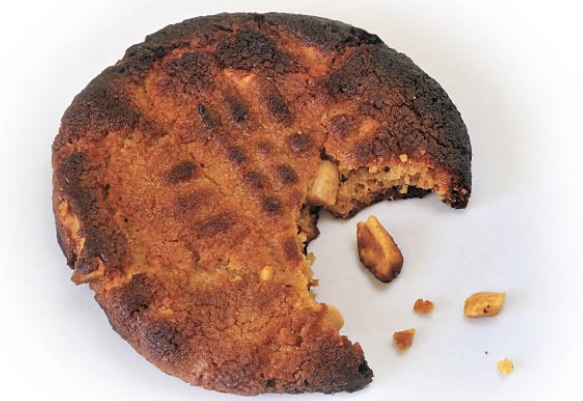
There is Always Some Goodness Remaining
Image: Pixabay
Watching a young child enjoying an ear of corn on the cob with a mouthful of missing teeth is another lesson in ignoring what is lost in favor of what can still be found. Even a very young child quickly learns to maneuver the ear into a position where the remaining teeth can strip the golden nuggets into their mouth. Tiny, butter-slick fingers manipulate, engineer, and guide the ear into the optimal angle for the next bite. This choreography of teeth, corn, and determination continues until the challenge has been met with satisfaction and joy.
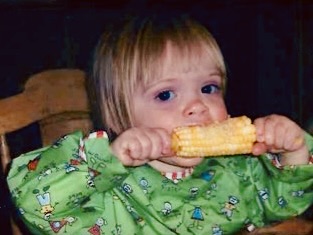
That didn’t stop her from sinking her remaining teeth into a delicious ear of corn.
August 2006
Facing small daily losses is a part of being alive. We are constantly finding substitutions, making adjustments, and creating workarounds. These situations seldom rise beyond feelings of frustration or annoyance into despair and grief. Life is also a complicated struggle when the loss seems insurmountable: when it feels more final, far less manageable. How do we find solace? How do we begin to reclaim what was left behind?
As the plane touched down at Logan Airport and the all clear was given, I turned on my phone. The screen was immediately ablaze with messages. While I had been trying to pass the time on the long overseas flight, my friend was fighting to hold on to her life. Bettie, twenty years and one day younger than I, had suffered two strokes. To reach the necessary section of her brain, the doctors removed a sizable section of her skull, placing it in the freezer until it could be returned months later. In the days that followed, loved ones, clergy, and the medical team watched with bated breath as the swelling subsided. Bettie was holding her own. She wasn’t going to die, but how was she going to live? What parts of her would remain? What would life be like in the days, weeks, and years ahead?
Slowly, my friend emerged from the fog of the unknown and returned to the person I knew and loved. When sharing her plight with Bettie’s friends and fellow congregants, Reverend Karen called her “a badass!” I’m not sure everyone would want to be considered as such by their spiritual advisor, but I would… and so would my “badass” friend.
The stroke has been a cruel and heartless larcenist, stripping away bits and pieces without mercy. Try as it might, however, it couldn’t take her personality. She is still the clever, determined, creative, funny person she always was. Amidst it all…the best parts of Bettie resisted, and she is still here. She IS a badass!
It hasn’t been easy, and she has become intimate friends with the grief of loss, but the dark days aside, she is adapting to the loss rather than fixating on it. Before that September day, she was an avid reader, an IT specialist, and an award-winning quilter. Today, she is legally blind and has limited use of her left hand. Now she listens to audiobooks on her phone, has learned to dictate messages and emails, and is exploring ways to express the creativity bursting inside her. She has learned to zip her coat with her wrist for support and is learning to write with her less-dominant hand. With adaptations, she sings in the choir with her devoted husband, Bill, whom she married four months after the stroke. She was the first bride I’ve seen wearing a sticker-festooned helmet instead of a veil, but she looked beautiful. The two of them adopted an elderly, toothless dog…Peanut…who gives them such joy and pleasure and completes their little family of three. The road ahead is still rocky, but she teaches me by example every day how to find what remains.
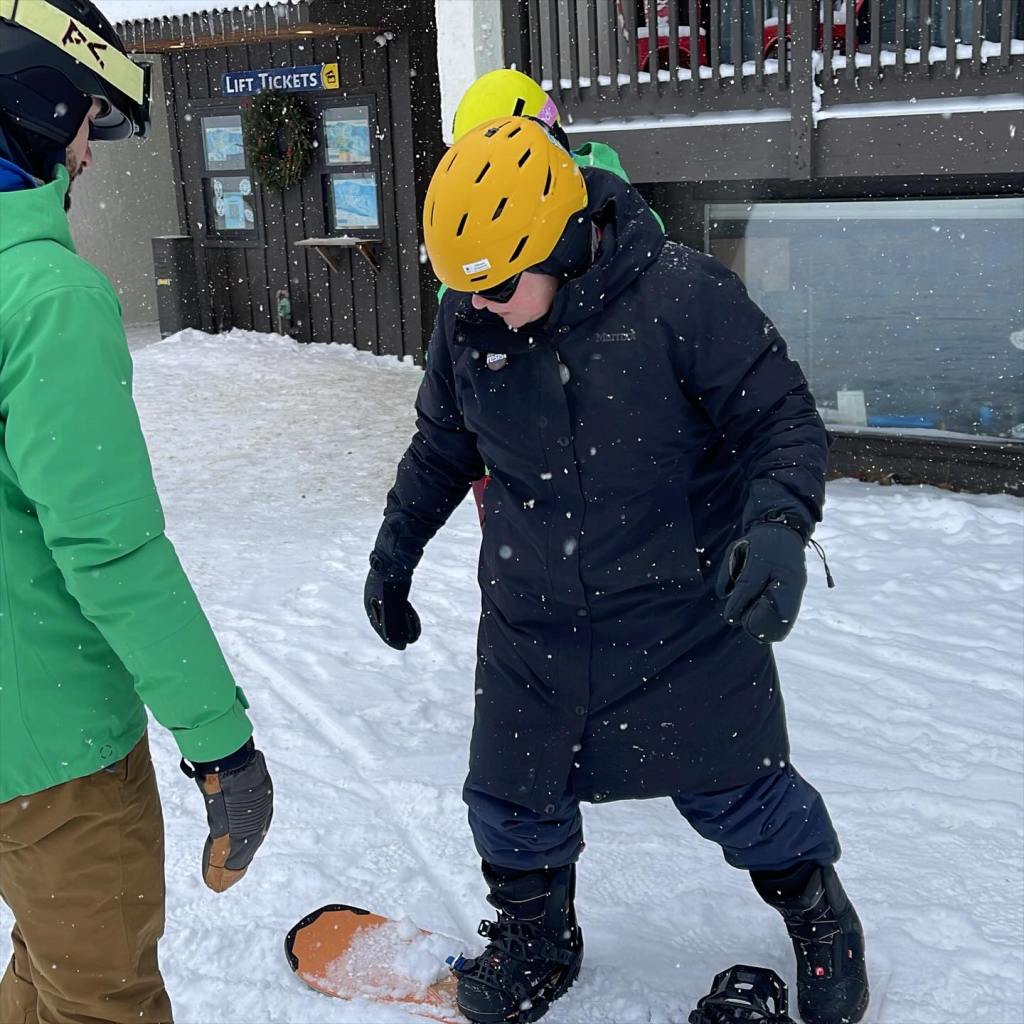
Vt Adaptive Sports
January 2026 Photo credit: Bill Paine
Grief doesn’t graduate you; it revisits. And since you don’t get to drop the course, you need a different strategy—not mastery, but adaptation. Not completion, but continuation. Suffering and pain are unavoidable. Yes, grief and loss come to everyone. Memories, hope, and desire help us navigate these dark valleys. With courage and perseverance, we can find the gifts…the insignificant and the profound…that always remain, giving life purpose and meaning.
So…take time to cry, scream, wail, or kick the wall. Do what you must. Then…get busy finding all the pieces that remain.

