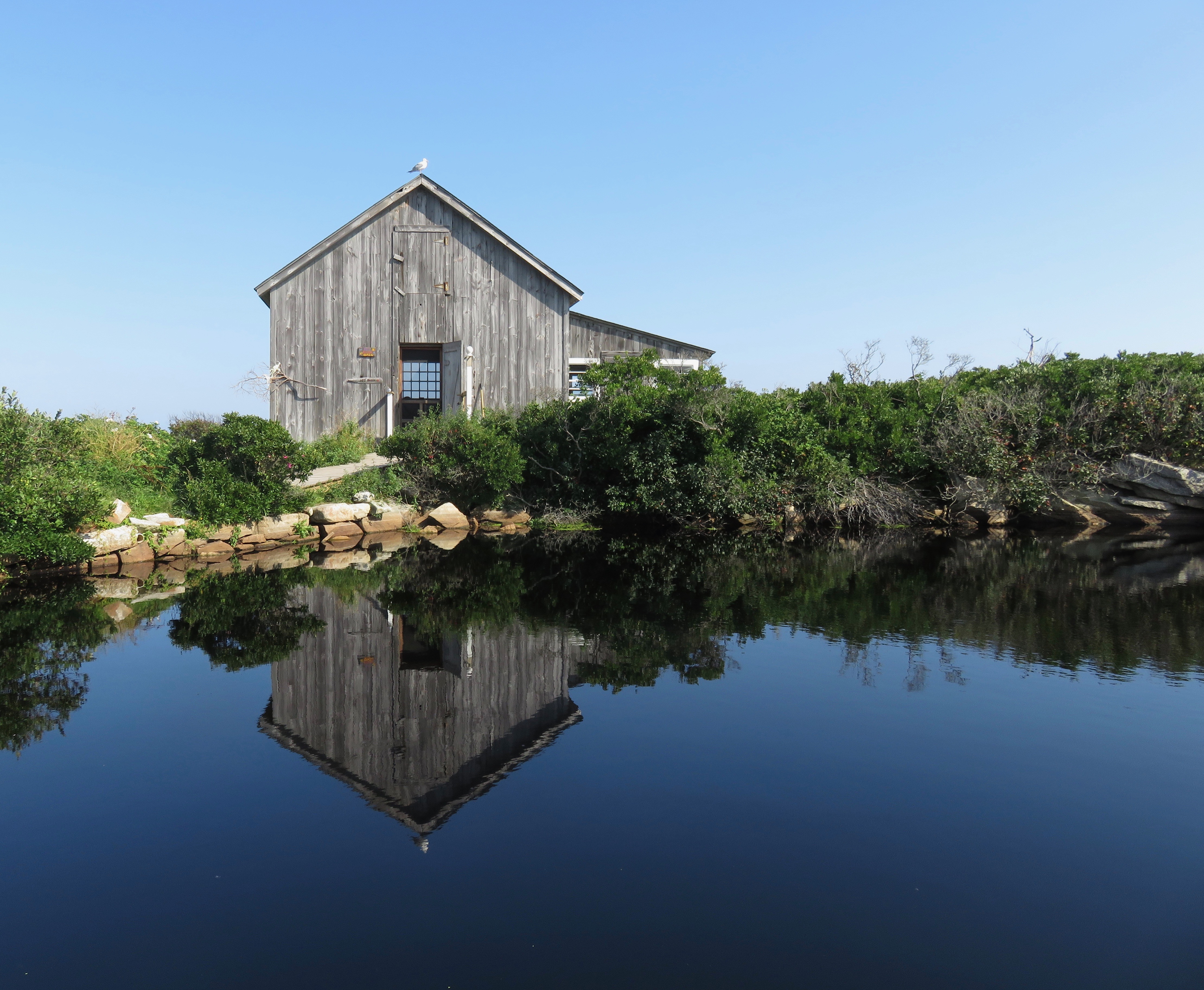
An Icelandic Adventure: The Epilogue…”What about St Giles’?”

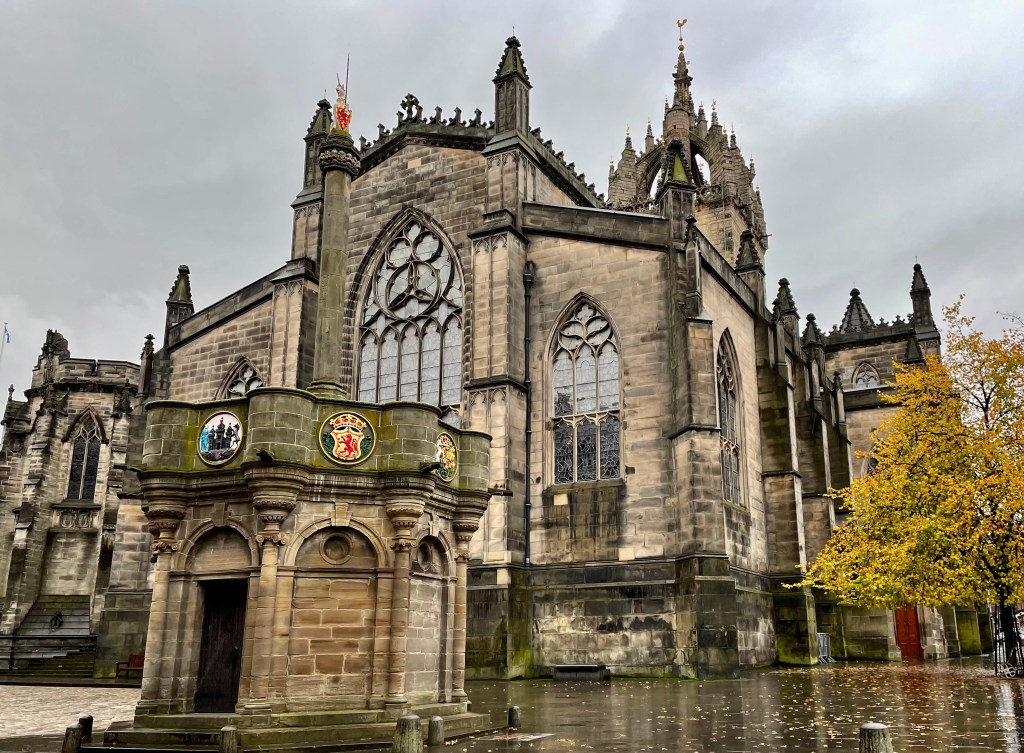
St. Giles’ Cathedral, Royal Mile, Edinburgh

I was on my way to Edinburgh for a quick week-long getaway with Cousin Doug, when my connecting flight was cancelled due to an unexpected, epic snowstorm…worst October storm in Iceland since records were kept… resulting in two unplanned nights on this snowy island. On day three, I was routed to Paris with a long layover. I’d be arriving late, but I’d finally be joining my cousin. Little did I know, as I found my row and waited for the arrival of the passengers booked into the adjacent seats, that this flight would be the most fun I ever had on a plane!

Without my Icelandic adventure and my detour to Paris, I would never have met Ellie and Kim.

“Realize that everything connects to everything else.” Leonardo da Vinci

When the flight attendant offered wine, we each took a bottle. We had snacks, we had wine, and we had an instant connection with conversations that ran the gamut from where are you going, where have you been, to men, jobs, sex, religion and everything in between. We didn’t talk much about politics. After all, who wants to spoil a good time with that? We laughed a lot…and…got more wine and snacks. I never had such a good time with strangers who became instant friends.

At some point in our conversation, I mentioned that I was carrying a picture of my friend, John. He has deep Scottish roots, loves all things Scottish, and longs to visit this special place. In the meantime, I would bring a photo of him in one of his kilts, with an inscription on the back, and leave it somewhere meaningful, so at least a part of him…his image…would be waiting to welcome him when he makes the trip himself. The next step would be finding the perfect place to position the tightly folded photo.

“I was thinking that Colton Hill, or maybe in an out-of-the-way spot in Princes Street Gardens, would be nice,” I said. “I could discreetly bury it in one of those places. Then it would eventually break down and become part of the earth. Can you think of a better place?”

“What about St. Giles?” Ellie suggested.


St. Giles’ Cathedral is my favorite place in all of Edinburgh, and with its Queen Victoria crown, it is a distinctive feature in the Edinburgh skyline. It was founded in 1124 by King David I and has been a working church for over 900 years. It was witness to Scotland’s turbulent religious history, and it was the parish church of John Knox, the Scottish minister, leader of the country’s Reformation, and founder of the Church of Scotland. Most recently, it is where Queen Elizabeth’s body lay In State before being moved to London.


The first time my husband, Dave, and I came to Scotland, we were on a bus trip…See England, Wales, and Scotland. When we reached Edinburgh, we had a brief time to explore on our own. Back then, I knew very little of this city I would come to love. There was really only one place, beyond those that the tour had planned for us, that I wanted to visit…The Thistle Chapel… a separate chapel within St. Giles’ Cathedral. All I knew about it was that it had an amazing ceiling.
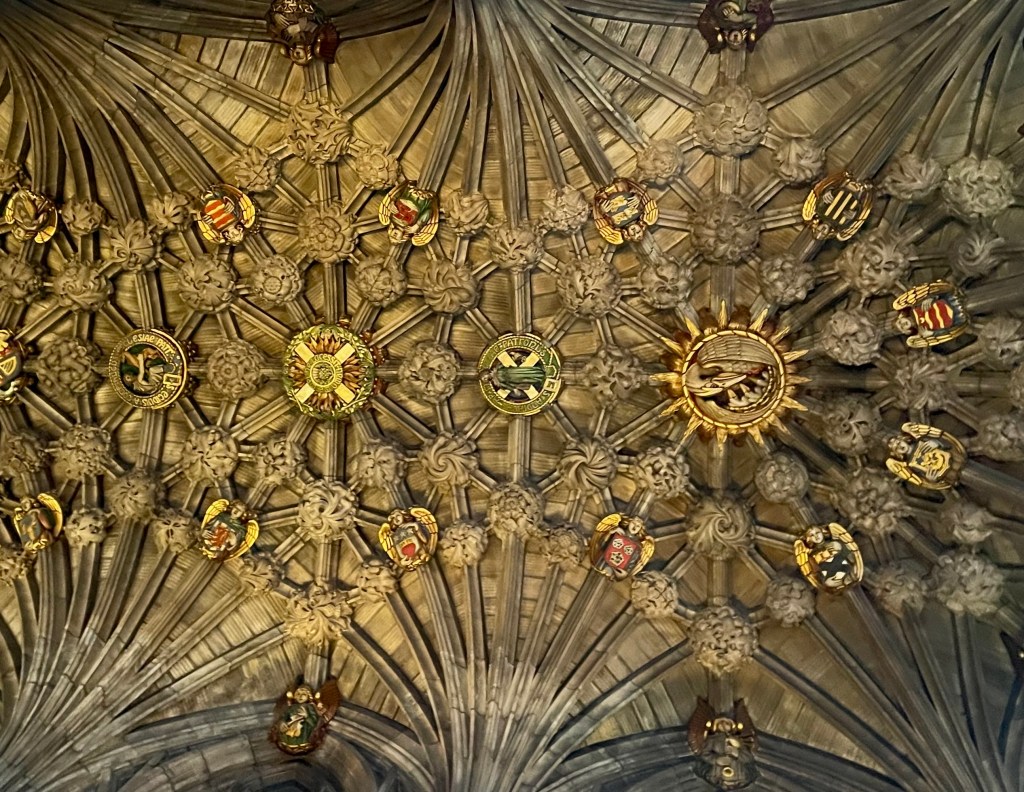
The ceiling in The Thistle Chapel

The Thistle Chapel was created for use by the Order of the Thistle, Scotland’s highest chivalric honour, reserved for individuals—usually Scots or those of Scottish descent—who have rendered exceptional service. Membership is granted at the sole discretion of the Sovereign.

The present Thistle Chapel was designed by Robert Lorimer and was finished in 1911. The craftsmanship is exquisite, and the attention to detail is astonishing. So many details are included in the carvings…religious, heraldic, and some purely Scottish…such as bagpipe-playing angels. Spectacularly beautiful, it is very difficult to photograph successfully due to its compact size and extensive carvings. It is something you have to experience.
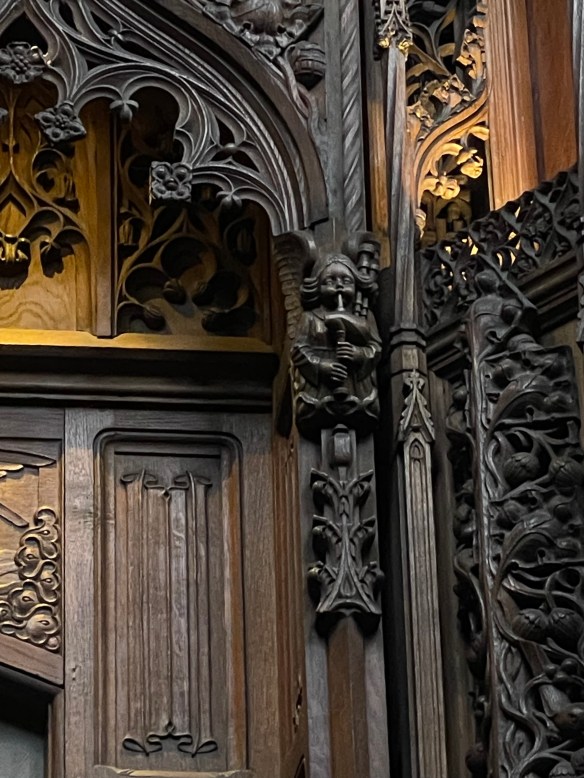
A replica of this angel, bought on my first visit, has hung on my wall for decades.
I visit her in person whenever I am in town.

When Scotland opened up after Covid, I brought my sister and her husband to see this place I love.

“I’m sorry. The chapel isn’t open today,” the greeter informed us.

“Oh,” I replied dejectedly. “That’s my favorite place in Edinburgh, and I wanted to show my sister.”

“Well, wait a minute. Let me see what I can do.” Within minutes, he was escorting us to the door of the chapel for a private tour. Upon reaching the door, he handed me the key. What a thrill.
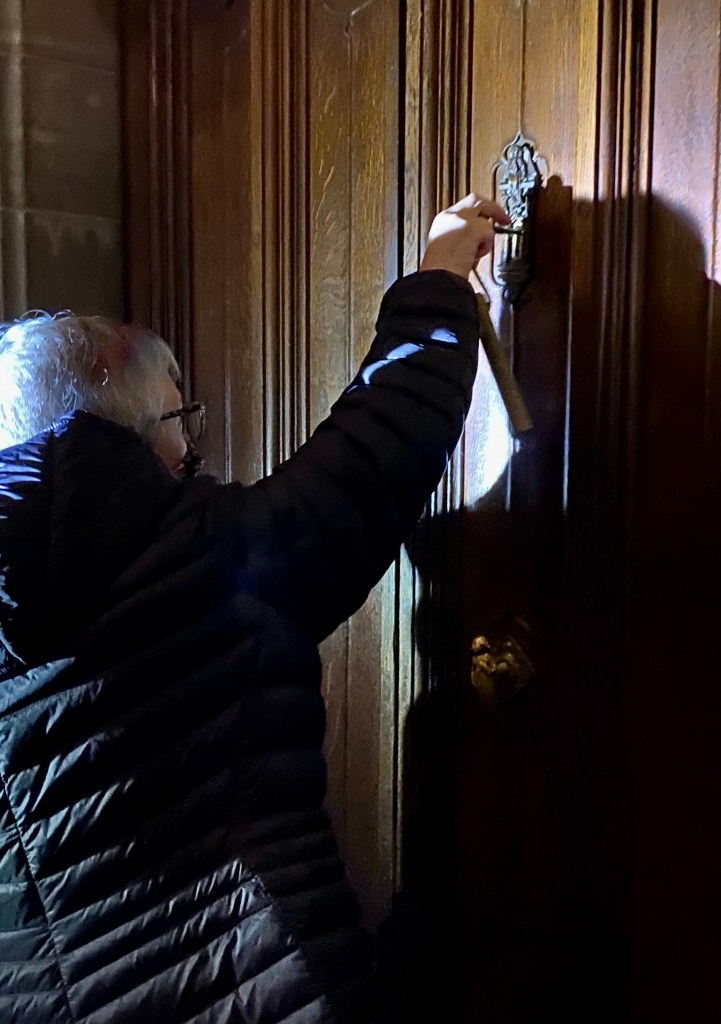
Holding this key and opening the door was such a thrill! Wow!

“What do you mean? What about St. Giles’?”I asked. “I’d love to find a place in St. Giles’, but I can’t imagine where that would be.”

“How about the roof? Maybe you could wedge the picture into a crack in the stones,” she proposed.

“Are you kidding!” I exclaimed incredulously. ” That would be absolutely amazing. But how?”

“I have a few connections. Let’s see what we can do.”

Later that night, I received an email from my new friend, Ellie. “You’re in luck,” she said. “You can arrive anytime tomorrow. Just tell them that you know me and that something has been arranged.”

Oh, my word! I was beside myself. I never expected anything like this. As I was drifting off to sleep, it occurred to me that I had a very small portion of Dave’s ashes in my suitcase. Why not bring him along, too?

When my cousin and I arrived at St. Giles’ the next morning, the gentleman at the door, Callum, recognised my name right off and said he would just be a minute and could then take us up. Presently, there we were climbing the ancient, twisting stairs to the roof.
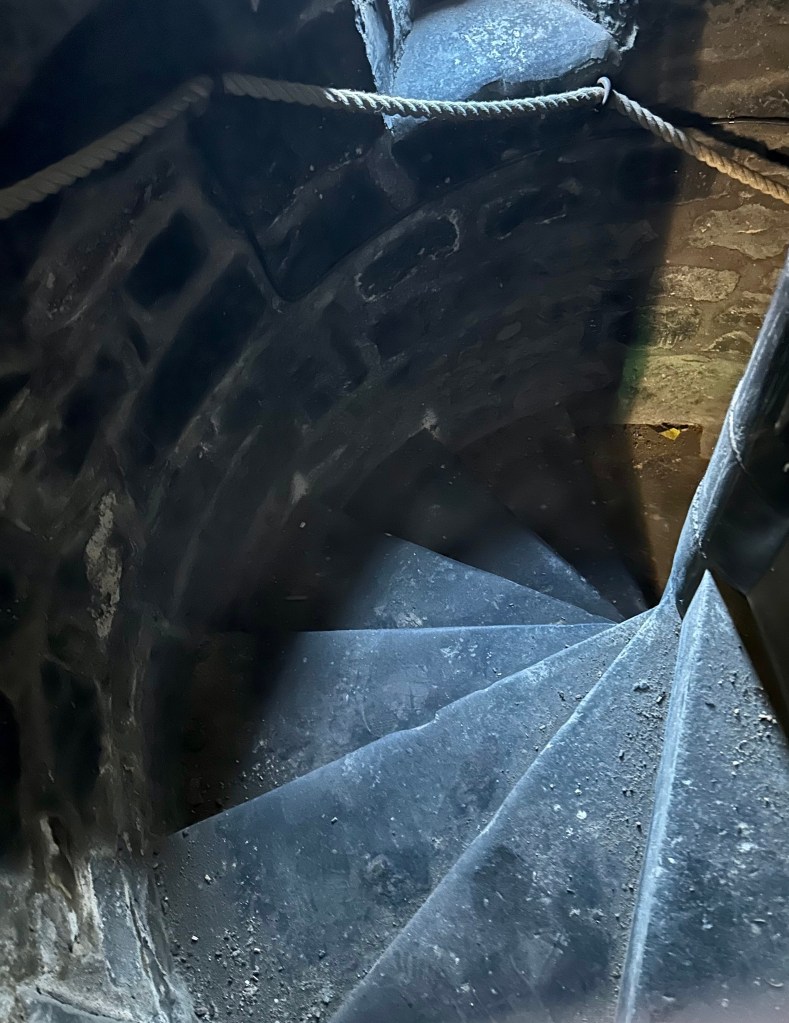
I grabbed a quick shot of the stairs on our descent.
You can tell there hasn’t been a lot of traffic here for some time.
It was much darker than the photo would suggest.

Suddenly, light flooded into the stairwell as Callum opened the door. We had reached the roof. I could hardly contain myself. There was a bridge that led from the door we had just exited to another door at the far end. Doug and I were instructed that, for safety reasons, we would have to stay on the walkway. Callum would do the actual placing of the photo, but we could help select the location.

“They’ve done repair and renovation up here in recent years,” Callum remarked. “It’s going to be too difficult to lodge the photo between the stones, but I’m sure we can find another place that will securely hold it.” Within a minute or two, the perfect spot had been found, and Callum had carefully lodged the paper into place. Perfect.
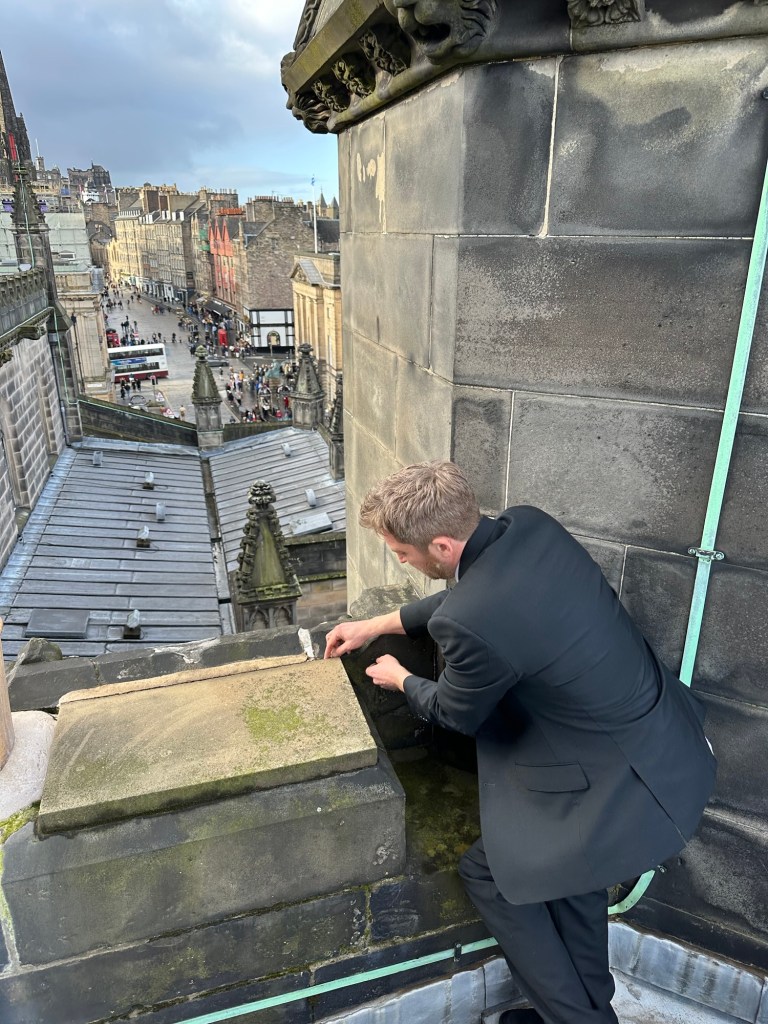
Callum carefully placed the photo.
Snug and Secure

The door at the far end of the bridge led to a room that contained the clockworks that regulate the bells. Doug noted that if the bells rang on the quarter hours and the half hour, it was due to ring in about two minutes. We waited. Hearing the bells from inside was a phenomenal opportunity. Wow!
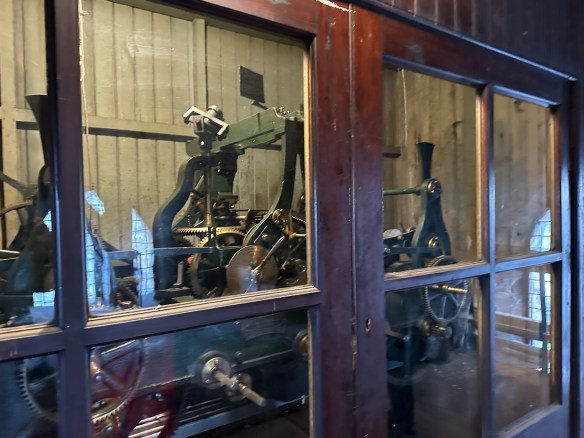
The Clock Works

At the far end of the metal walkway, I placed Dave’s ashes. How appropriate that the man of my past and my friend, the man of my present, are both in this place that is so important to me. Dave’s ashes will eventually be blown or washed away, as they should be, for he has gone on to the great adventure of what lies beyond. John’s photo, on the other hand, will be hidden here for a long time, just waiting for him to make memories of his own in this astonishing place.


St Giles’ has 900 years of history, and now I’m a part of it…and so are John and Dave.

Unexpected Destinations hold the promise of Unexpected Experiences, Unexpected Awakenings and ultimately Unexpected Blessings!! _Unknown

You might call it luck, chance, or serendipity that my path crossed with those of Ellie and Kim. After the Iceland Adventure and the Paris Detour…perhaps…but I prefer to think of it as a gift of grace…an unexpected blessing for which I am so very grateful.

St. Giles’ Cathedral
The Royal Mile, Edinburgh
We were on the left side of the level below the crown,
It’s too dangerous to go up there now.

Chaos…Bearing Witness, Finding Beauty

“We are often taught to look for the beauty in all things, so in finding it, the layman asks the philosopher while the philosopher asks the photographer.” 

― Criss Jami, Killosophy

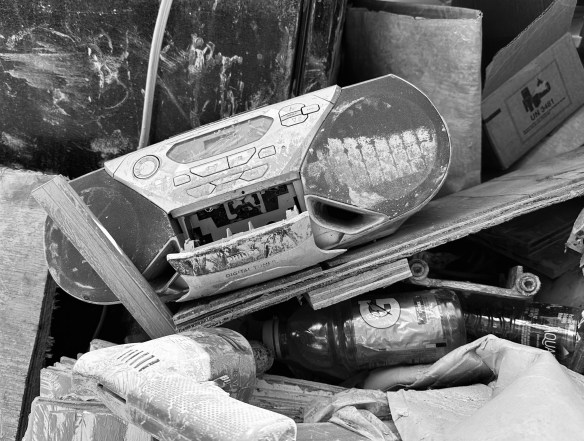
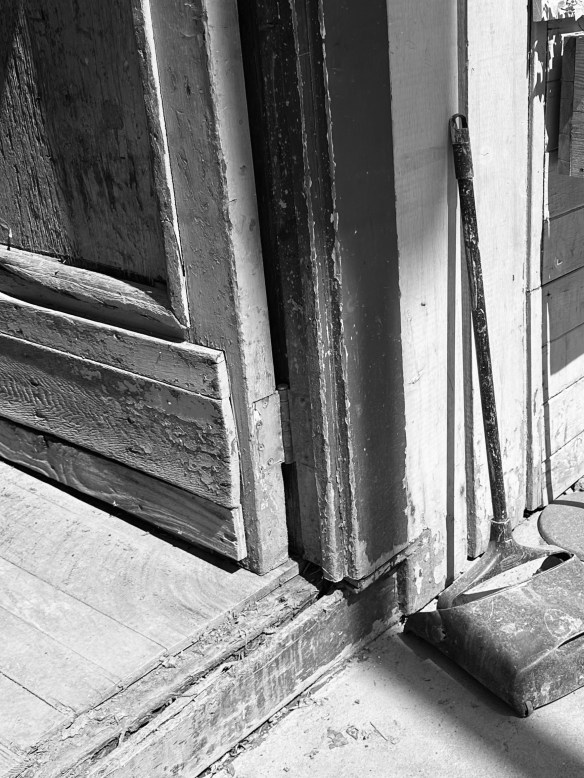
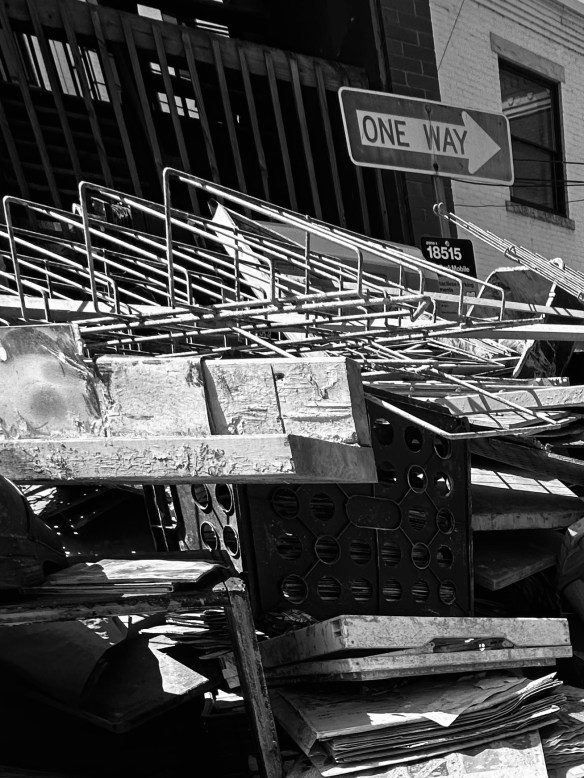
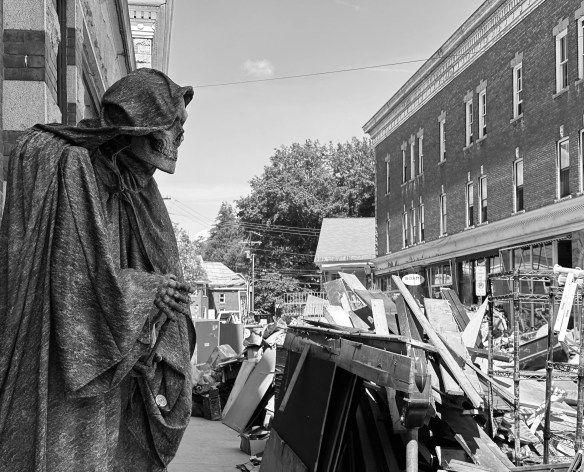
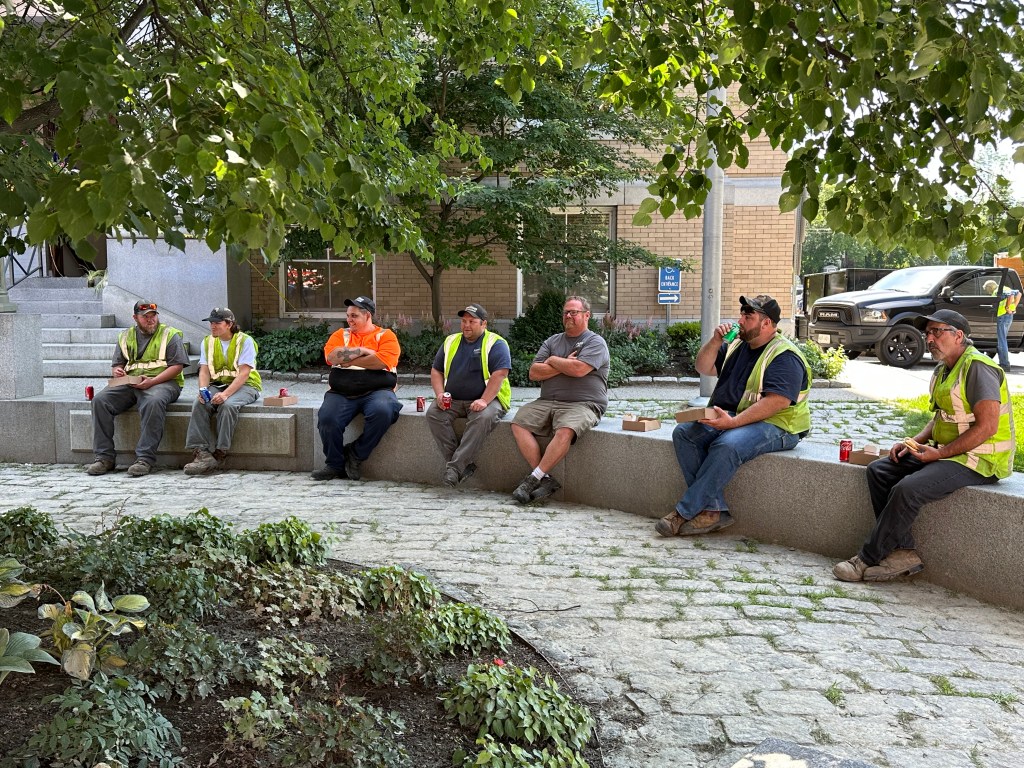
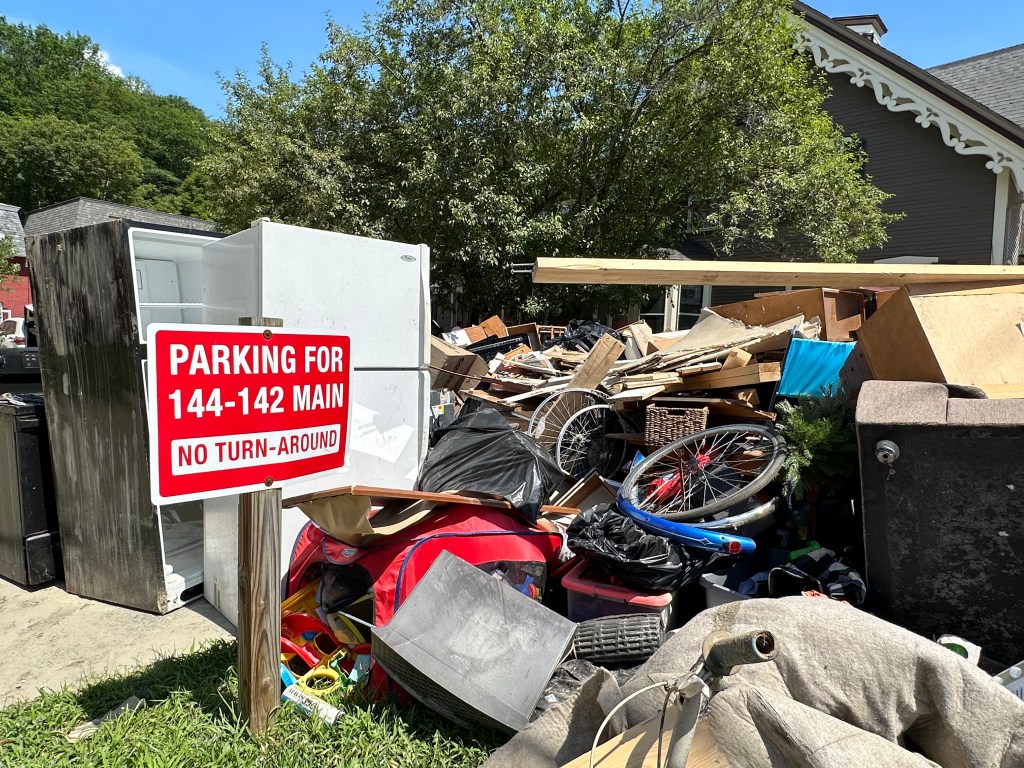
In the aftermath of the recent flood, Vermonters of every ilk came together to help those most affected survive and get back on their feet. There were tasks for every age and ability. I had several different duties, including the one I chose for myself…that of bearing witness…finding beauty in the chaos.

“Grief needs an outlet. Creativity offers one.

Hope Edelman

A welcome summer rain quenched the thirsty fields until the farmers said enough. Those living beside the river turned their rain-spattered faces toward the sky, imploring the gods of water to stop emptying their buckets upon the earth. The rain came and came and came. The rivers began to swell, and still, Mother Nature ignored the pleas. Within hours, dirty, brown water was once again filling basements, streets, houses, and businesses in Montpelier and surrounding towns, just as it had in 1927, 1992, and 2011.

The river is a two-face friend…unpredictable and complicated,… a friend who can’t decide whether to build up or tear down. The first settlements in Vermont were usually in the valleys and along the rivers. Rivers were a source of life-giving water; they provided routes for transportation and could be tamed and harnessed for power. Those same rivers…that same power…could also destroy all that stood in its path. A living organism that could leap its confines, change its course, and claim new territory on one day and then, with regret and contrition, slink back silently to the peaceful embrace of its banks the next.

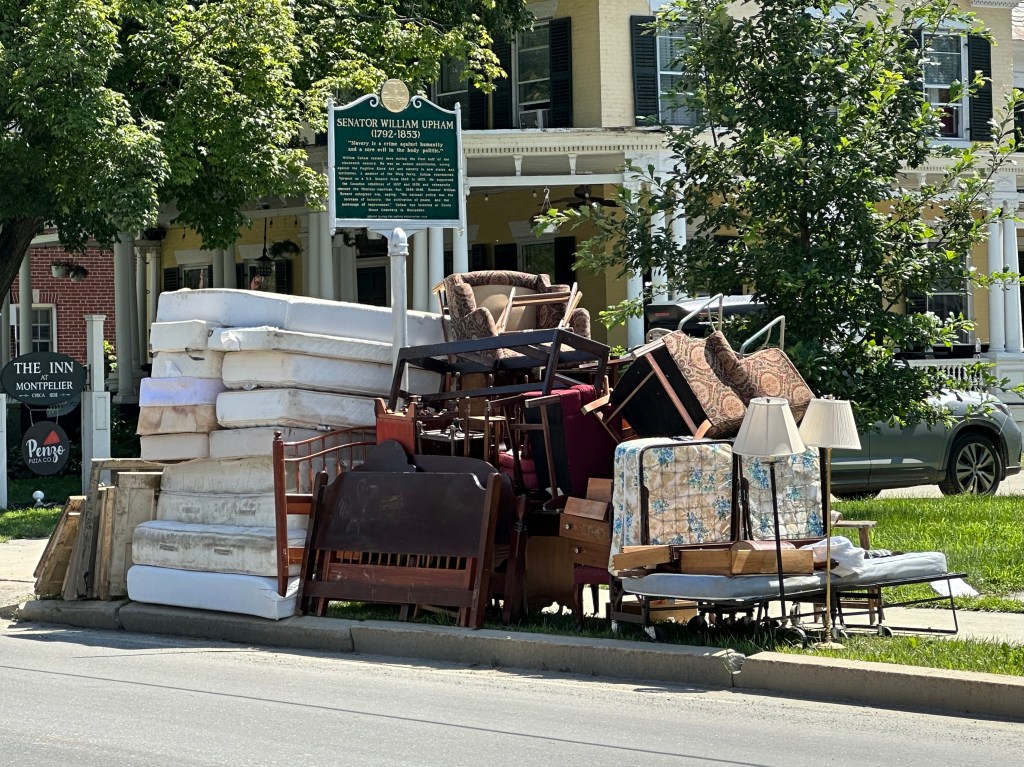
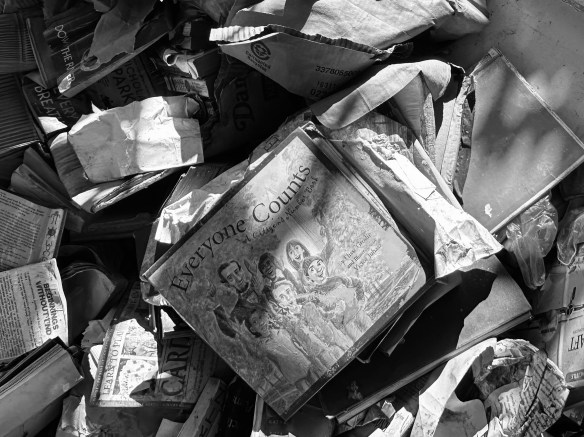
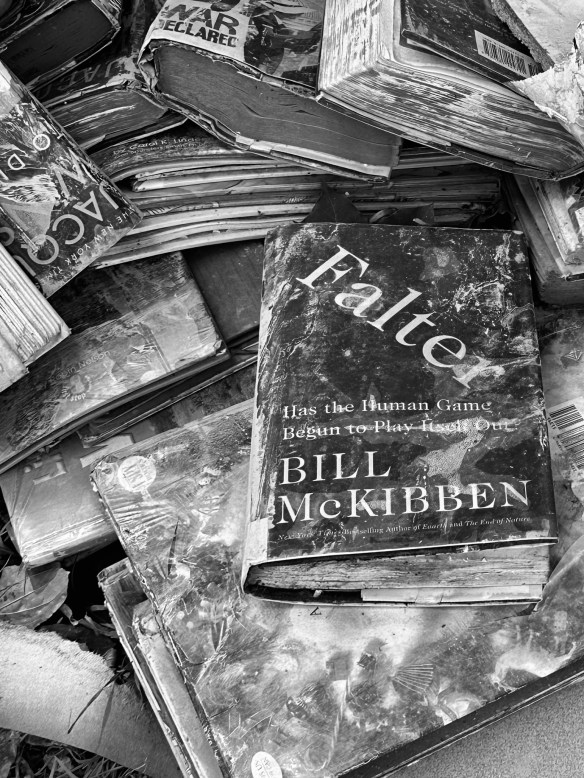
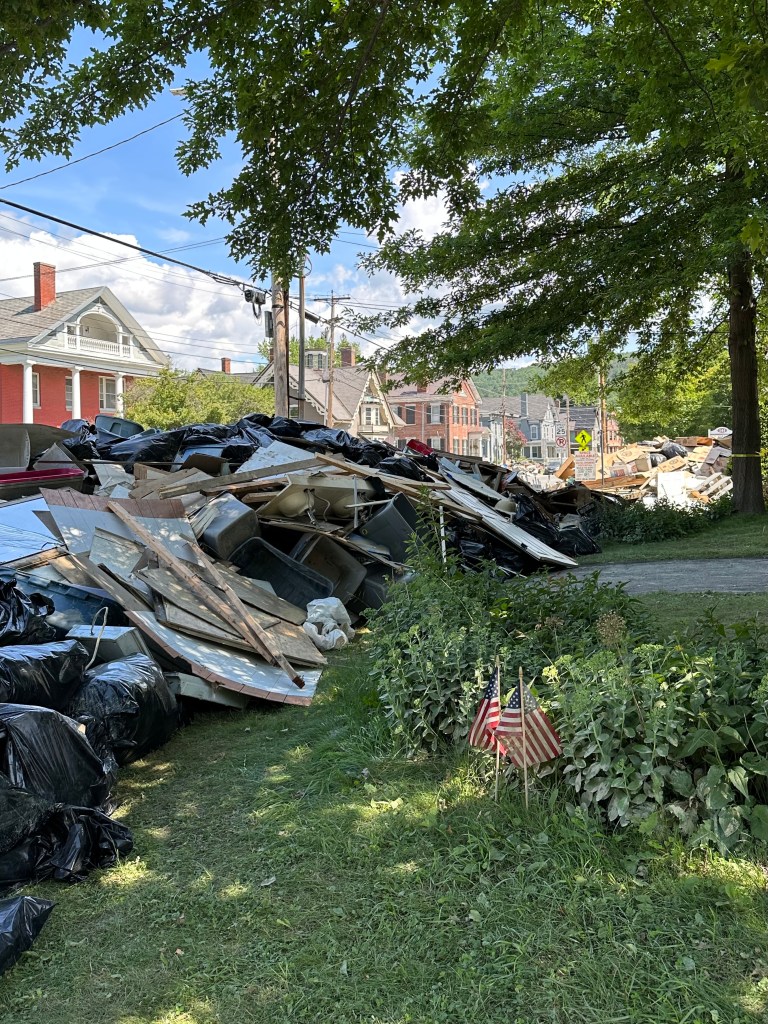
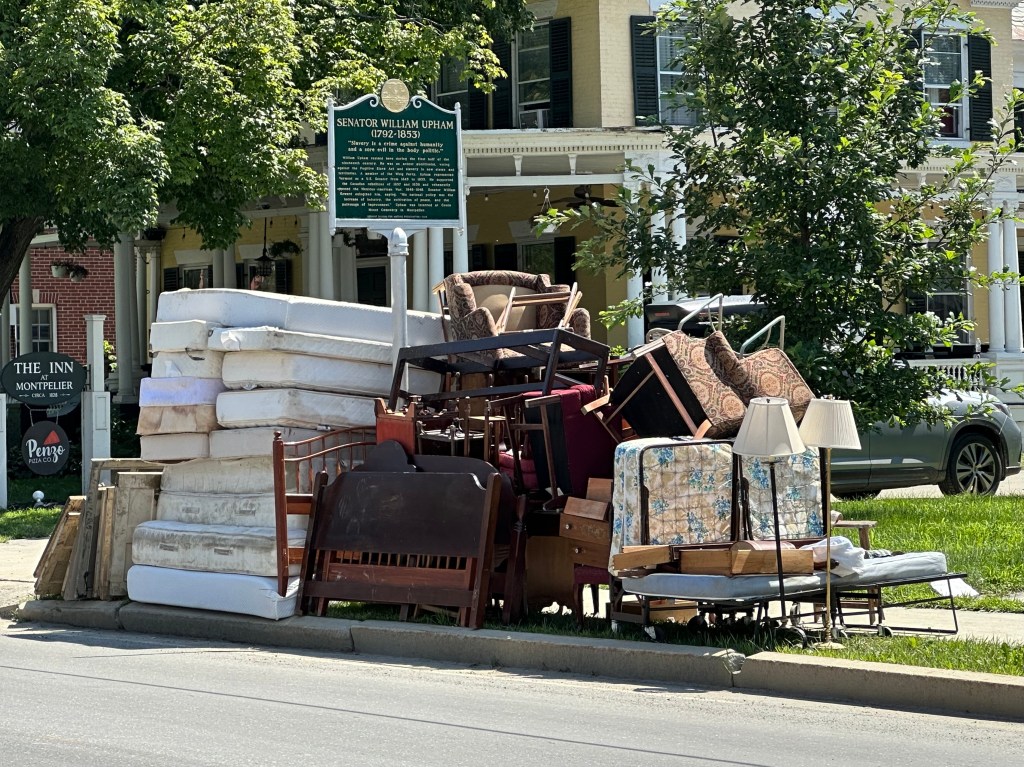
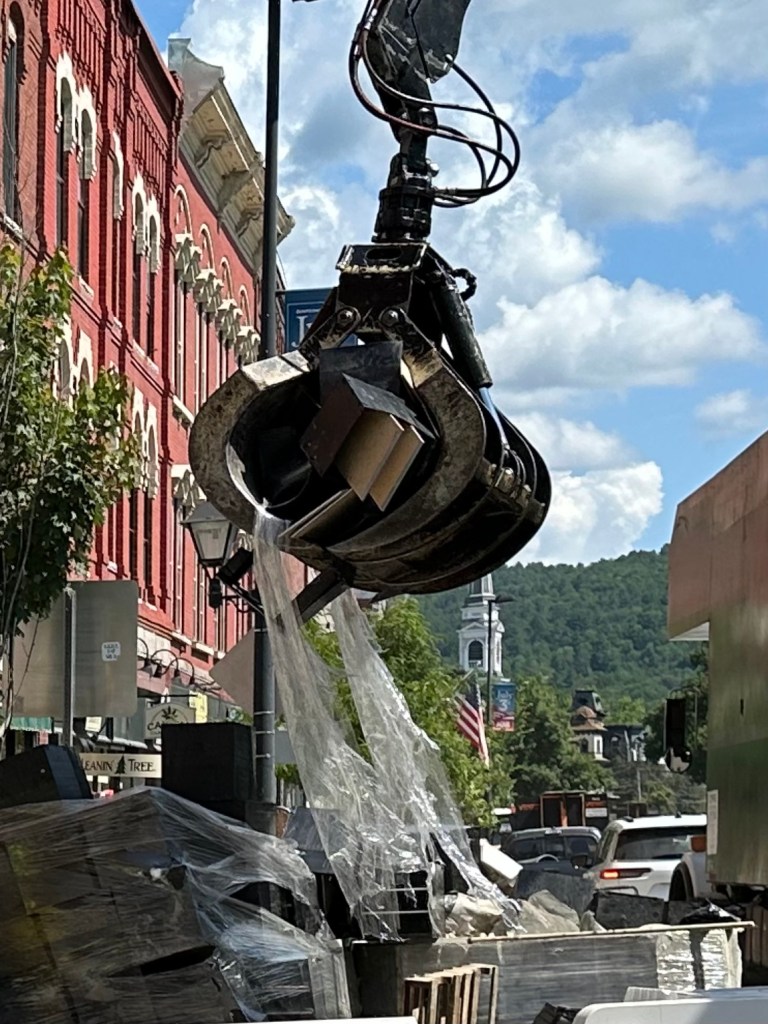
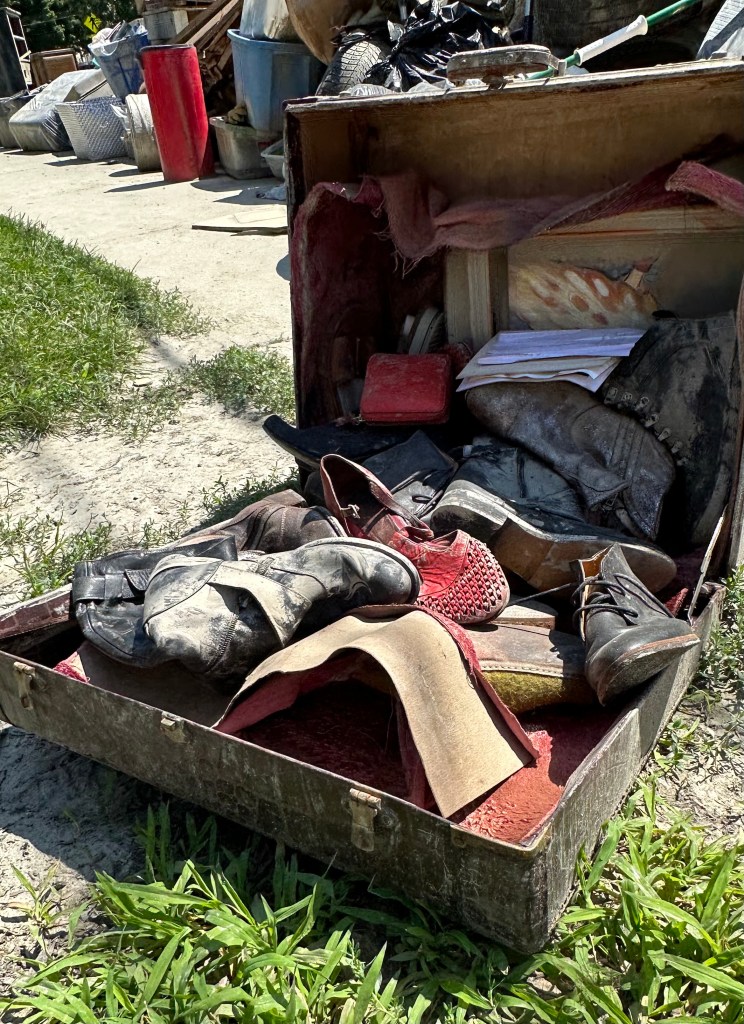
The water…once the joy of children, kayakers, and fishermen…became a swirl of silt, sewage, and unnamed chemicals creating the perfect breeding ground for mold. To prevent the spread of this fungus, homeowners and businesses began to remove everything that had been touched and contaminated by the flood waters. There was a rush to simply…Get. It. Out. Mold grows well on paper products, cardboard, ceiling tiles, and wood products. It can also grow in dust, paint, wallpaper, insulation, drywall, carpet, fabric, and upholstery. For the protection of all, it had to be extracted as soon as possible. The piles and piles of debris began to grow as bucket brigades of strangers passed foul wreckage from hand to hand, emptying stores, churches, homes, government buildings, and even the library.

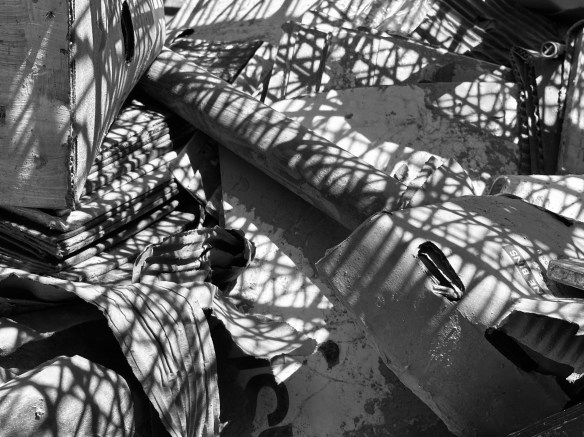
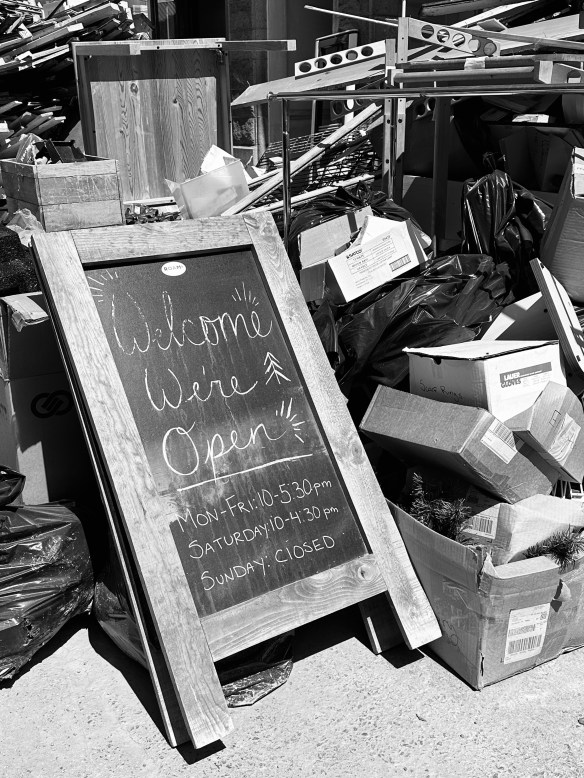
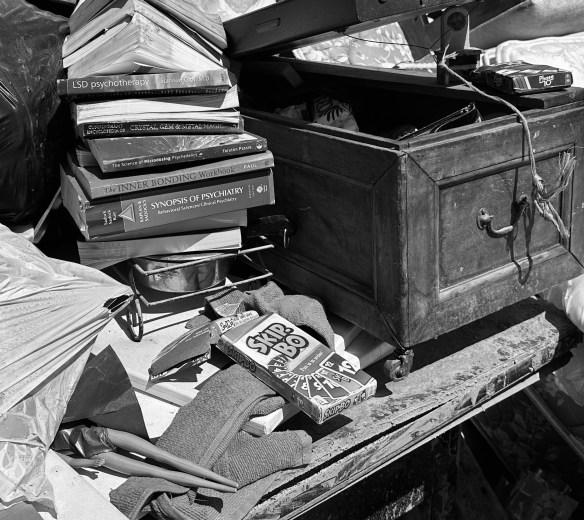
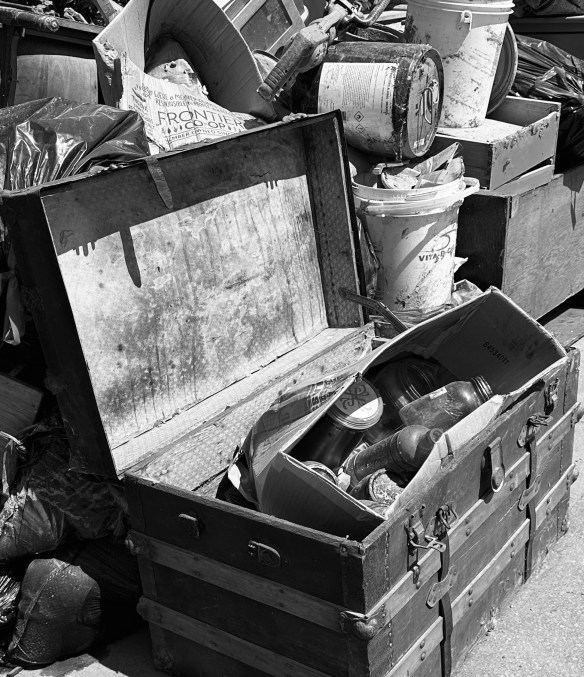
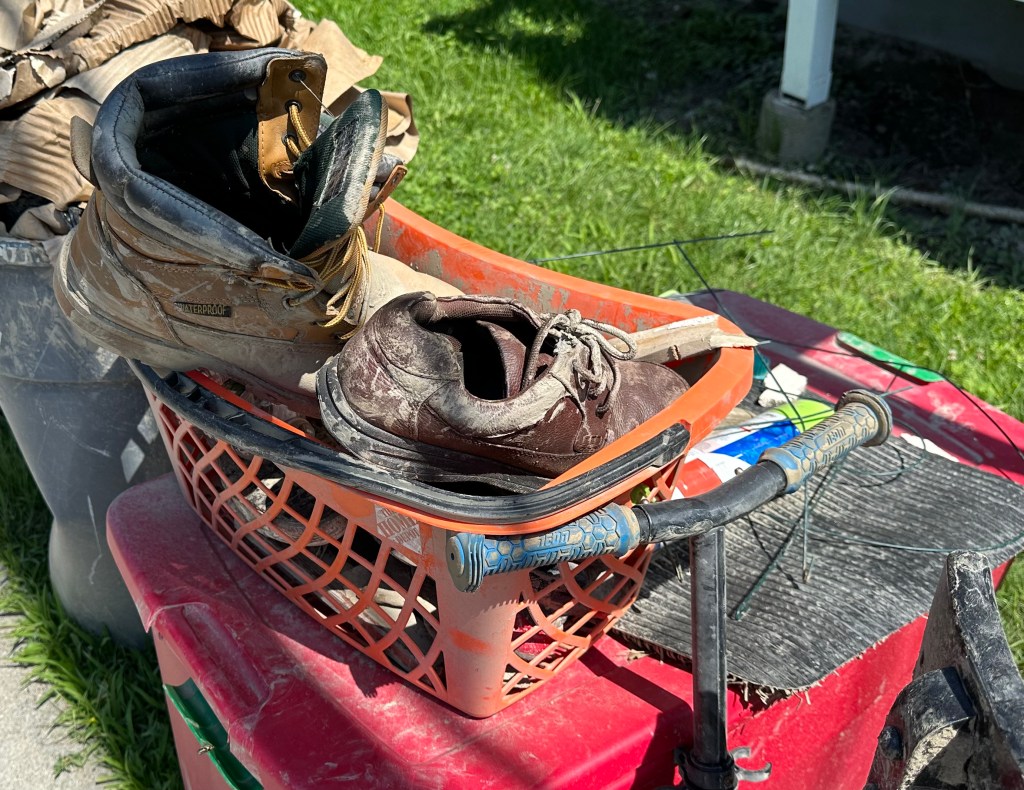
As I walked down familiar streets within a few blocks of my home, I was overcome by the loss I witnessed. Seeing the remnants of lives unceremoniously discarded on sidewalks and in roadways produced a reaction within me like none I had experienced before…a combination of sickening despair and profound sadness and compassion. The mass of refuse, garbage, and trash continued to grow into stacks of nearly incomprehensible size. Like my stunned friends and neighbors, I was at once repulsed by the stacks and also drawn to look upon them. I resisted the impulse to take photos of the destruction. It seemed too invasive…too intimate…as though I was observing grief personified.

“Anyone who has lost something they thought was theirs forever finally comes to realize that nothing really belongs to them.” 

Paulo Coelho

Shortly after the flood, I realized that my favorite flannel shirt, my down vest, and a pin I always wear on the vest were missing. The last time I saw this trio was several weeks ago. I searched my tiny condo. There are few places I could have absentmindedly stashed them after all. I’ve moved everything in the closet, looked under furniture, and even checked recently emptied suitcases. I’ve tried to backtrack by looking at pictures from the previous few weeks. “Yes, I was wearing them in this photo. That means I had them in this place.” Phone calls to the lost and found were unsuccessful. I know where they’re not, but I don’t know where they are. At some point, I know that I have to admit that what I lost…someone else has found. My disappointment has become another’s delight. I know all these things on a conscience level… I’ve even replaced the vest…but…I keep looking for what I know was lost. Eventually, I’ll accept the loss, but at present, I am still in the denial stage of grief.

What is it about us human beings that we can’t let go of lost things?

Leslie Marmon Silko

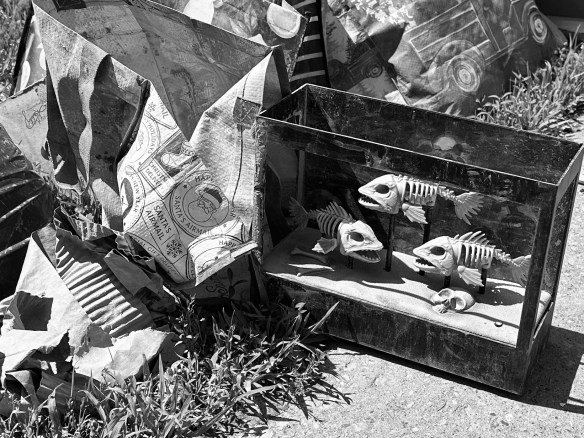
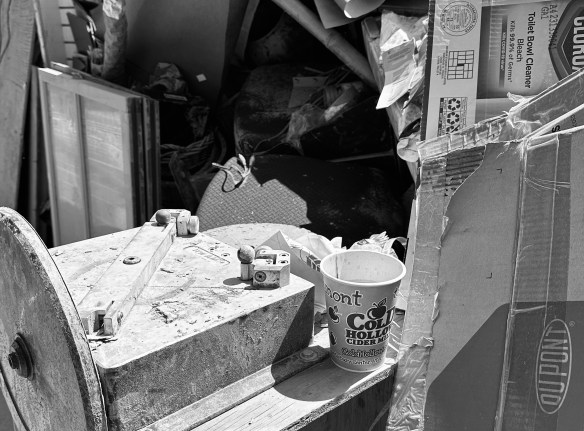
My missing flannel shirt…LL Bean…the most divine color…my vest, and the irreplaceable pin,…important to me but pretty minor in the overall scheme of things…prompted me to reconsider those huge stacks of debris, rubble, and discarded fragments of lives forever changed by the deluge and my reluctance to photograph it. While the pain and loss represented by the enormous, ever-growing mounds was almost palpable, I began to realize that rather than turn away from the suffering, I had to look. I needed to bear witness. It was difficult, but I was compelled to look closely…with compassion and empathy…and record the heartbreak of what had been surrendered to those massive piles.

“So, one morning, after delivering muffins for the workers and volunteers…a job I could do…I walked the streets in the center of our small city with my camera in hand. As I began to crop with my feet and focus on small areas of the larger chaos, I realized that, as always, beauty surrounds us. I was capturing unplanned still lives through the lens of my camera. The photos require the observer to really look at the images to unlock and appreciate the beauty that was hidden in the destruction. Blogger, Jordan Lingle has said that “Finding beauty in chaos starts with realizing that there is beauty in the places of our lives that are often confusing, hard, difficult, and challenging. It doesn’t come easy or natural. You will want to hide the chaos. But if we want to find beauty in chaos, we have to start looking.”

“Art is not always about pretty things. It’s about who we are, what happened to us, and how our lives are affected.”

elizabeth Broun

The mountains of debris are slowly being collected and carted away. The sidewalks on Main Street are nearly as empty as the stores that line them.

The pain of loss may remain, but given time, the beauty found in chaos will once again be replaced by the beauty found in order, predictability, and familiarity. I’ll keep my camera handy.

“Wabi Sabi is a philosophy of life that focuses on flaws but not to judge but to find and celebrate the positivity within them. This philosophy helps people see things in a simple way, accept its impermanent nature, from which life becomes easier and lighter.” (vmnhome.com)

On the morning I set out with my camera, I met a friend on State Street. “If you have a pulse, you’ve been affected by this flood,” she said. Each of us has our own personal story. This is just one of them. On that morning, I could see the beauty in the situation. However, I know that if I’d seen my favorite plaid shirt peaking out of one of those mountainous stacks, finding the beauty might have been impossible, and this might be a different story indeed.

Finding 92 Year-Old Men on the Thirty-Ninth Floor

“We require from buildings two kinds of goodness: first, the doing their practical duty well: then that they be graceful and pleasing in doing it.”

John Rusking

“Go around the block again.  The entrance has to be here somewhere,” she said. “This is definitely the address.”  

“I just wish there weren’t so many one-way streets,” I added.

Last August, my granddaughter Fiona and I made a rather quick trip to Toronto. Harry Potter and the Cursed Child had been condensed from two plays… a six-hour-two-ticket commitment to a big more manageable single, 3-hour production. The new version could only be seen in New York, San Francisco, Melbourne, Tokyo, Hamburg, and Toronto. Broadway might have been closer, but we are more comfortable and familiar with Toronto, so our plan was hatched. As soon as tickets went on sale, we’d be ready to pounce. The box office opened, and I was ready with my credit card. I chose our theatre seats carefully, but in my haste to secure lodging, I inadvertently booked us into the wrong hotel.

“There must be a front door somewhere. Let’s go around again.”

Night was falling, and we were deep in the heart of the city. Fiona, the patient navigator, and I, the frustrated and very tired driver, were anxious to get out of the car and settled into our room.  We were in an area with which I had limited prior experience and was not at all acquainted with our hotel on the corner of Yonge and King.

“This looks like an alley.  Do you think it’s the entrance?” we wondered aloud as I pulled onto the narrow side street.

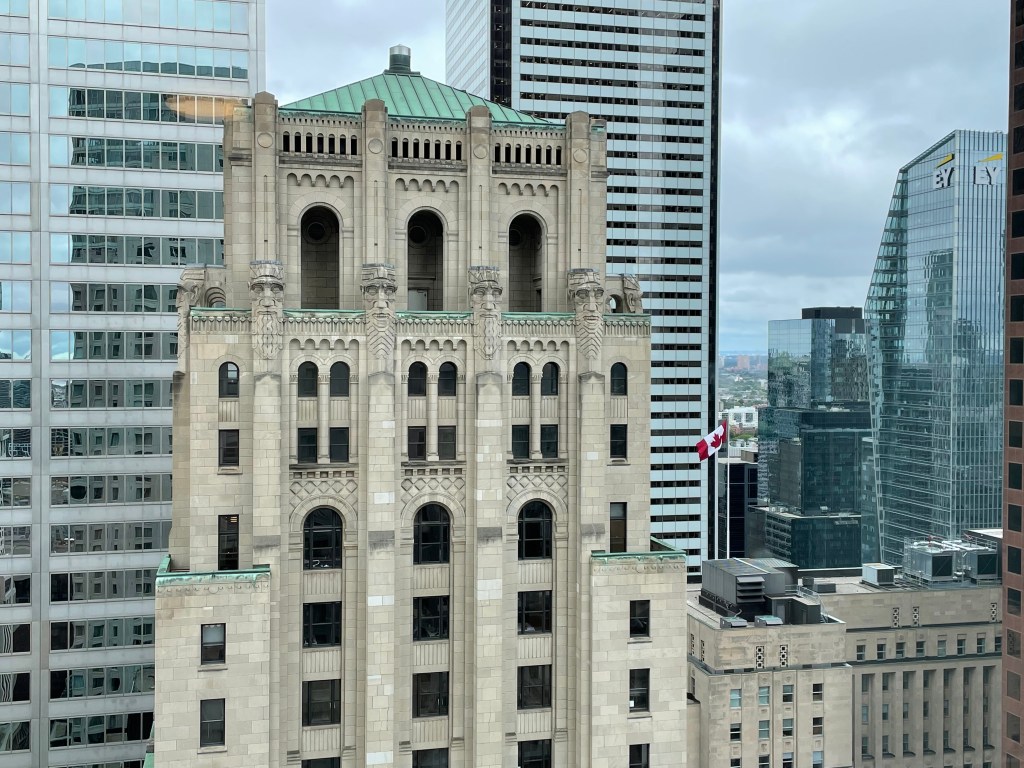
Finding our hotel amid the forest of concrete and glass, eventually, parking and checking in was the welcome culmination of a very long day of driving.  Fiona and I both enjoy the benefits that cities provide, but we’re basically small-town girls, even though we live in the capital city of Vermont. We are more accustomed to structures left from the Victorian era than the tall, imposing structures of the 20th century.  We dragged our small suitcases into the empty elevator, pushed the button, and rode in silence to the thirty-ninth floor. The doors opened onto a bank of elevators next to an enormous window that looked out onto the adjacent buildings. Our view was filled with a quartet of huge Art Deco faces smiling directly at us! What an unexpected surprise. They were magnificent!

View From the Elevator Bank on the Thirty-ninth Floor.
August 2022

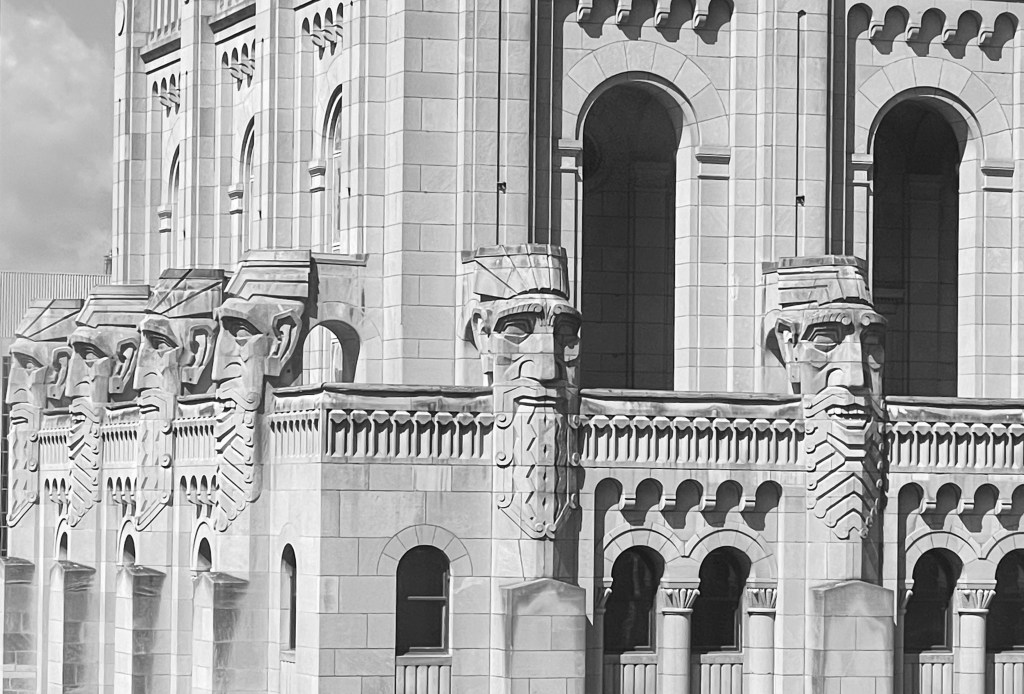
I was mesmerized.  As luck would have it, our room was also opposite these smiling gentlemen. My first instinct was to grab my camera. These new friends were willing subjects.  Smiling patiently as I took shot after shot.  Upon closer inspection, I realized that in addition to the quartet I had originally seen, there was an entire men’s chorus of twelve visible concrete heads and an additional four on the far side of the building for a total of sixteen.

I had so many questions.  What was the significance of these enormous faces, and even more puzzling to me…why were they constructed so far above any passersby on the ground? 

The Canadian Bank of Commerce Building about 1930
“Hey! Let’s add sixteen massive heads that will be almost impossible to see.”

The Canadian Bank of Commerce Building was built between 1929-1931.  At the time, it was the tallest building in the entire British Commonwealth. It retained that distinction until the early 1960s.  Although towering and impressive,  it is now somewhat dwarfed by the slender concrete, steel, and glass structures that surround it. As Toronto’s first skyscraper, it must have been an imposing presence.  Until it was replaced by the CN Tower, it was from here that curious Torontonians would arrive to see the city spread before them like a patchwork quilt.  The arched openings at the 32-floor observation deck…no longer open…also gave tourists an up close and personal look at the massive bearded heads, albeit from an unusual angle.

From the top of their heads to the bottom of their flowing beards,
each of the gigantic sculptures measures 24 feet high.
August 2022

I was drawn to these steadfast gentlemen and their perpetual smiles.  From my vantage point at nearly eye level, I could see that the 16 men shared two distinct and alternating faces with subtle differences indistinguishable at street level. With a little Google sleuthing, I discovered that they shared four names as well: Courage, Observation, Foresight, and Enterprise, and were said to symbolize the forever watchfulness of the bank. 

Great buildings that move the spirit have always been rare. In every case they are unique, poetic, products of the heart

Arthur Erickson

I appreciate and enjoy the beauty of the natural world, but I am also drawn to the stories told and the mysteries not yet unfolded of great works that humans have built and sustain.  I imagine the council fires where ancient visionaries first pitched the idea of building Mesa Verde, Stonehenge, or Donottar Castle.  Knowing my cautious nature, I’d probably have been among the skeptics.  “You want to build what? Where? With what?”  And yet, our forebears built cathedrals, castles, bridges, and towers that many thought impossible.

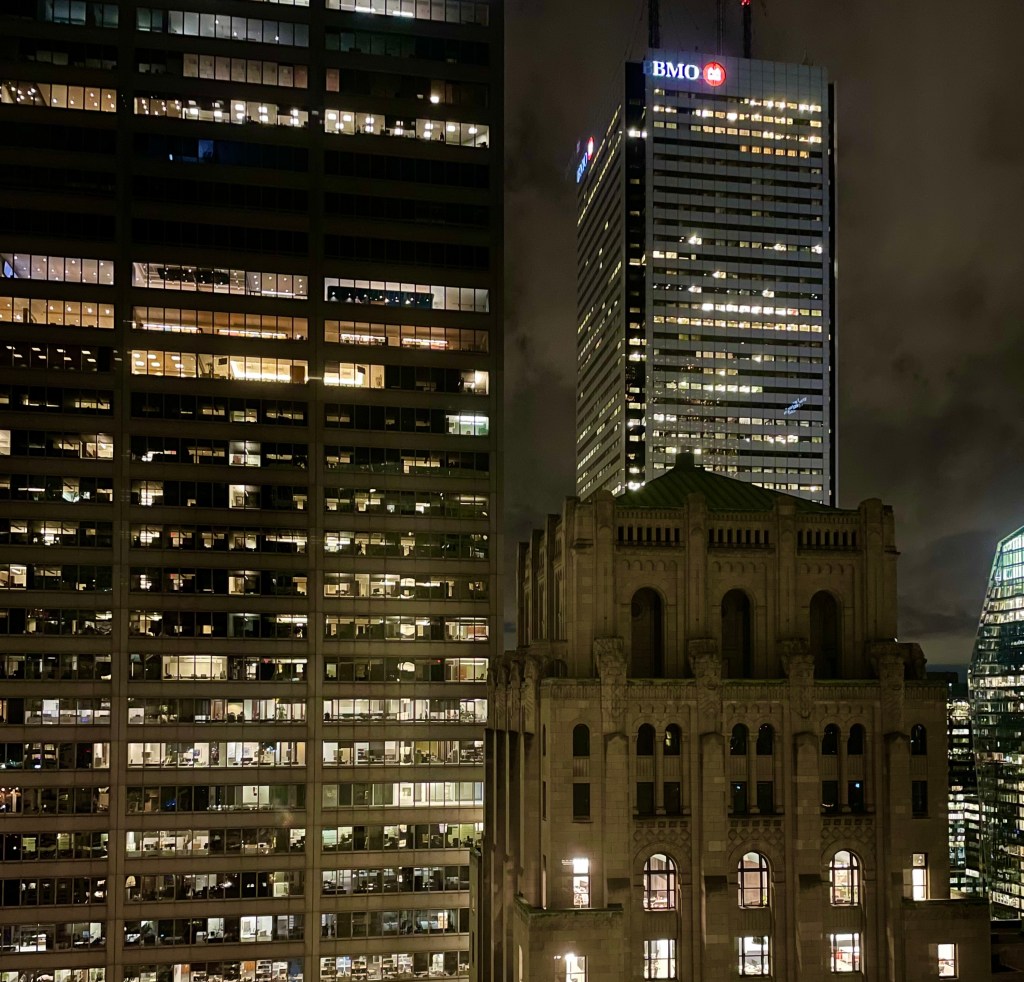
I watched as the light of the early morning golden hour transitioned to the velvety richness of the night sky and the glow of countless city illuminations played across each face. 
August 2022

So, why did they place these heads so high above the city traffic below? Google couldn’t help me with that, but perhaps it’s like lacy underwear. Few, if any, other people see it, but you know it’s there. After all, does beauty need a reason? Maybe beauty is the reason.

It was the magic of Harry Potter that drew us to Toronto on this trip, but if we are observant, pay attention, and are open, we can find magic and beauty all around us without the use of a magic wand or whispered incantation. How much I am missing, I wonder, by keeping a steady forward gaze? I must remind myself to anticipate, be aware, and expect to find gifts of wonder, beauty, and delight that others have created for me to discover and appreciate.

Sometimes, booking the wrong hotel can be the right thing to do.

Life in The Chrysalis

We delight in the beauty of the butterfly, but rarely admit the changes it has gone through to achieve that beauty.

Maya Angelou

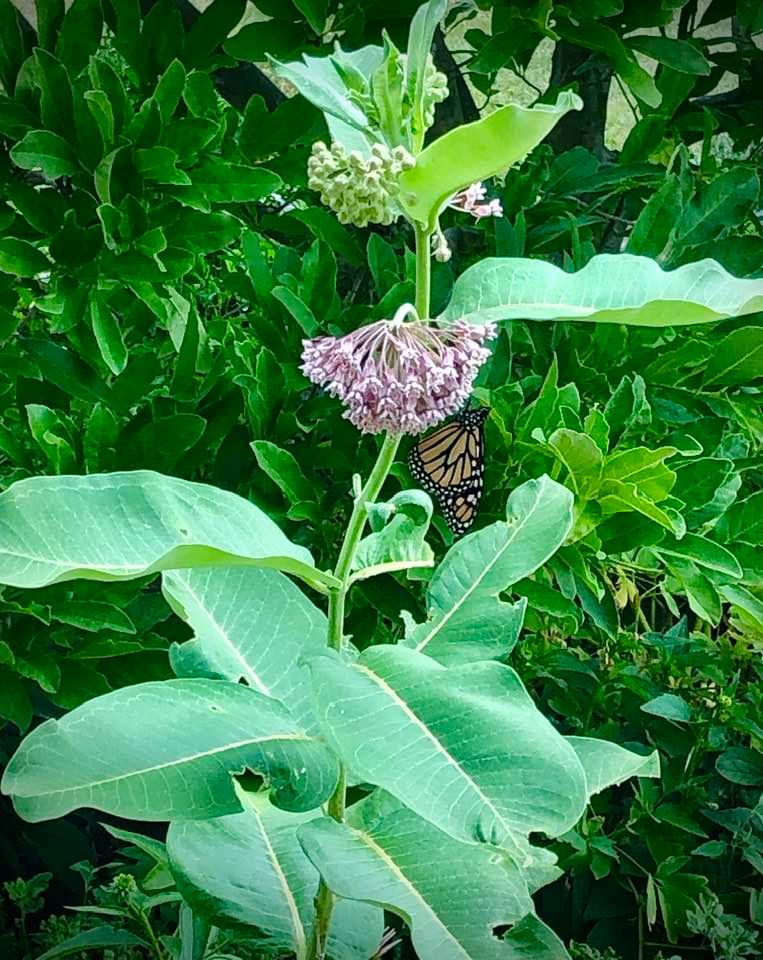
Tucked in amid the profusion of perennials that surround my sister’s house you will find a huge milkweed plant. Often relegated to roadside ditches or borders along the back-forty, milkweed is dwindling in number along with the Monarch butterflies who spend their caterpillar phase living and feasting on the host plant’s bright green leaves.  This particular milkweed did not suddenly appear in my sister Kelly’s garden unbidden and unannounced. It was planted and nurtured there with intention; an invitation to passing Monarchs looking for a place to lay their eggs. “Please, come. Land here. We want you in our neighborhood.” The hardy plant grew tall and strong, full of broad leaves, but not a single Monarch flew by to check out the menu or the accommodations.

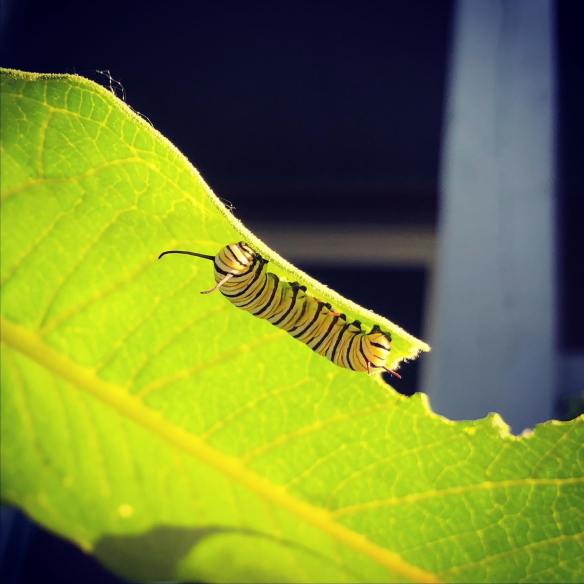
Finally…a couple weeks ago, my sister, called to say that she had discovered a Monarch caterpillar feasting on the milkweed. “Come on out. You’ve got to see it,” she implored with great excitement. “It’s amazing.” So, with my mask in place and observing social distancing, I  went to watch this remarkable little fella sprint from the bottom of the stalk up toward the buds of the blossom at the top.  He was a voracious eater and quite the little gymnast.

The First to Arrive (Photo: Kelly Daab Green)

Then, just as suddenly as he appeared he was gone.  Apparently, Monarch caterpillars are considered a delicacy by the Orioles who nest nearby. Kelly was heartbroken as she imagined her little friend being the main course at an Oriole summer picnic. Perhaps, however,  her striped buddy had escaped the birds and traveled to find a more safe and secure place to construct his chrysalis. Monarchs will often hike as far as ten meters in search of the perfect spot, but whatever his fate…lunch or location…he was no longer present on her milkweed.

In the coming days, she searched the remaining leaves, waiting and willing another caterpillar to appear on her special plant, vowing that if she found other she’d bring it in and rear it, keeping it safe from predators. No one came.

Imagine her joy when days later, while exploring the back fields near her rural home, providence placed her right next to another milkweed where a beautiful orange and black queen of the sky rested quietly on a leaf. As she watched, the regal butterfly appeared to shudder slightly, pause and then fly quickly away leaving behind a very tiny, cream-colored egg. Once she knew where to look and what to look for, Kelly found many more of these pearl-like spheres no larger than the head of a pin.

Led by Providence (Photo: Kelly Daab Green)

Originally, Kelly had hoped to watch a single caterpillar progress from larva to pupa and then butterfly; instead, my little sister was rapidly becoming a Militant Monarch Mama caring for her tiny charges as they grew, and she learned more about how to nurture, protect, and defend her growing army of caterpillars.

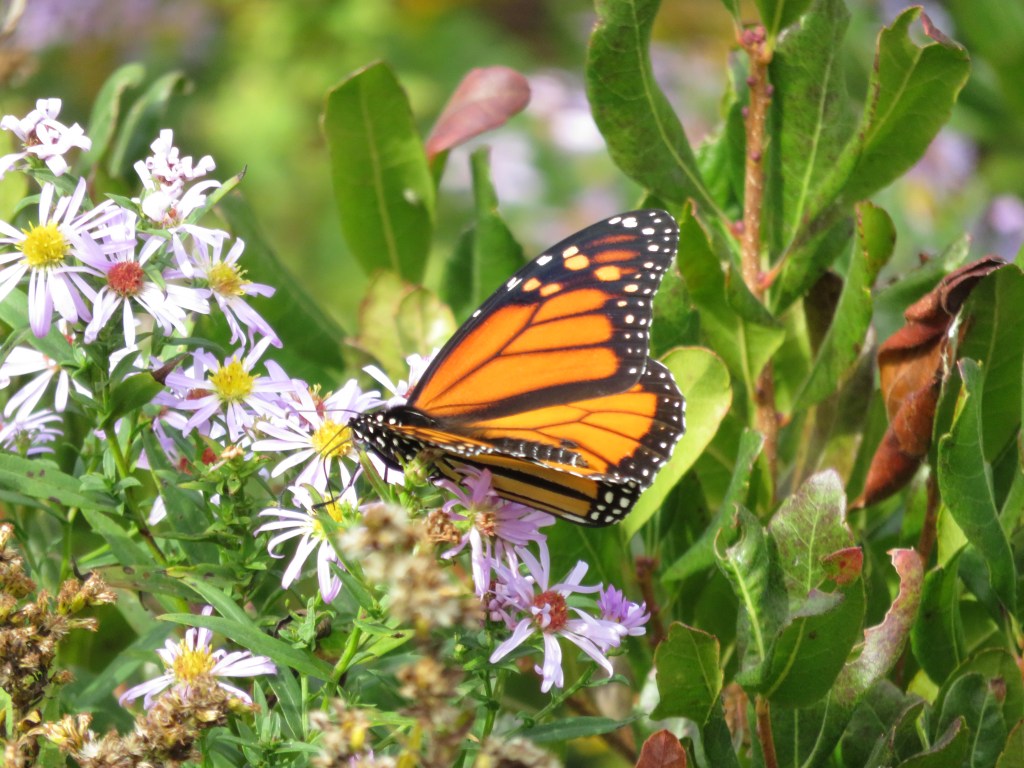
Humans have always been drawn to butterflies. It is mesmerizing to watch one of the delicate, winged creatures flit from flower to flower, gathering nectar, knowing that our momentary pleasure will end too soon as they hurry off toward the next stop on some ancient instinctual travel plan. The way butterflies float and drift on the currents, alighting momentarily just beyond reach, is magical. Our eyes trace their carefree journey across the sky, and we marvel that such fragile wings can carry them about the clouds.

On the Migratory Path, Vinalhaven, Maine, October 2019

Of course, there are many dangers and obstacles that threaten our wee friends…lack of habitat, climate change, rain, dust, pesticides, and birds… but these flying Buddhists don’t worry about such things and are not troubled by thoughts of the future. Always living in the present moment, their short lives are unencumbered by responsibilities and are filled with beauty and freedom.

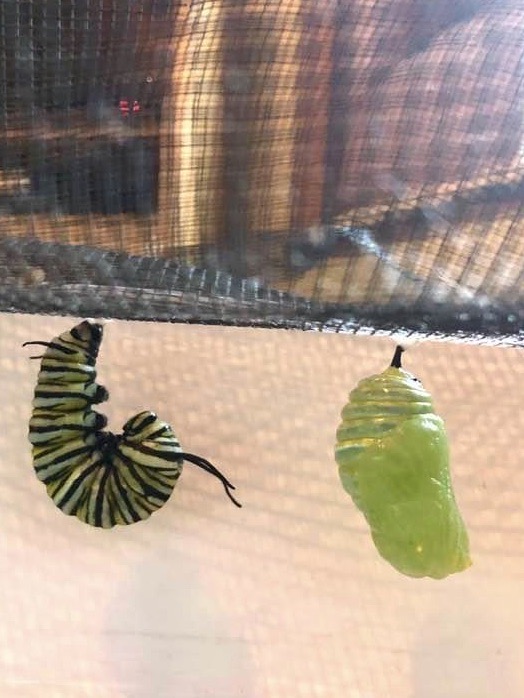
One early evening a few nights later, I heard the ding on my phone alerting me that I had a message. I was delighted to receive an update complete with photos. There on the screen was a close-up of a small, silky, green chrysalises and a buddy about to create one of his own. Two of Kelly’s charges were one step closer to becoming butterflies.

Caterpillar to Chrysalis (Photo: Kelly Daab Green)

Watching a lowly caterpillar snake off his jester’s garb and shimmy into a silky green changing booth only to emerge dressed in the bright orange raiment of a sovereign, it’s easy to understand why butterflies often symbolize the soul, transformation, or rebirth. Their metamorphosis is the epitome of second chances and new beginnings.

While there are many references to caterpillars and butterflies, when discussing change and transition, I find little mention of the chrysalis or the time spent within it. What’s going on in there? How does a caterpillar grow wings? Biologists have studied the changes that occur within this hidden realm, but to the casual observer…people like me…it remains mysterious and miraculous.

I wonder if the caterpillar was surprised to find that it was slowly twisting and turning itself into the strange vessel that was to be its new home. Does he have an idea of how long he’ll be hanging there or why or what he’s supposed to be doing? Does he know that he is in the world, yet secluded from it?

No. Probably not.

“The caterpillar does not become a butterfly by telling everybody it has wings. It actually buries itself in darkness and grows those wings.”

C. JoyBell C.

Lately, I have had the feeling that I, too, am living in a kind of chrysalis…isolated, waiting, expecting, and hoping for change.  How long will this last? Will I emerge better and stronger? Will I find wings with which to fly? Will my former life on the milkweed be recognizable when I reemerge into a post-COVID-19 world? Some things, when they change, never do return to the way they once were, and butterflies reassure us that that can be a good thing.

“When you find yourself cocooned in isolation and you cannot find your way out of darkness…Remember, this is similar to the place where caterpillars go to grow their wings.”

Nicole Stephens

And so…we wait.

We hope.

We remind ourselves that even life inside a chrysalis is a gift.

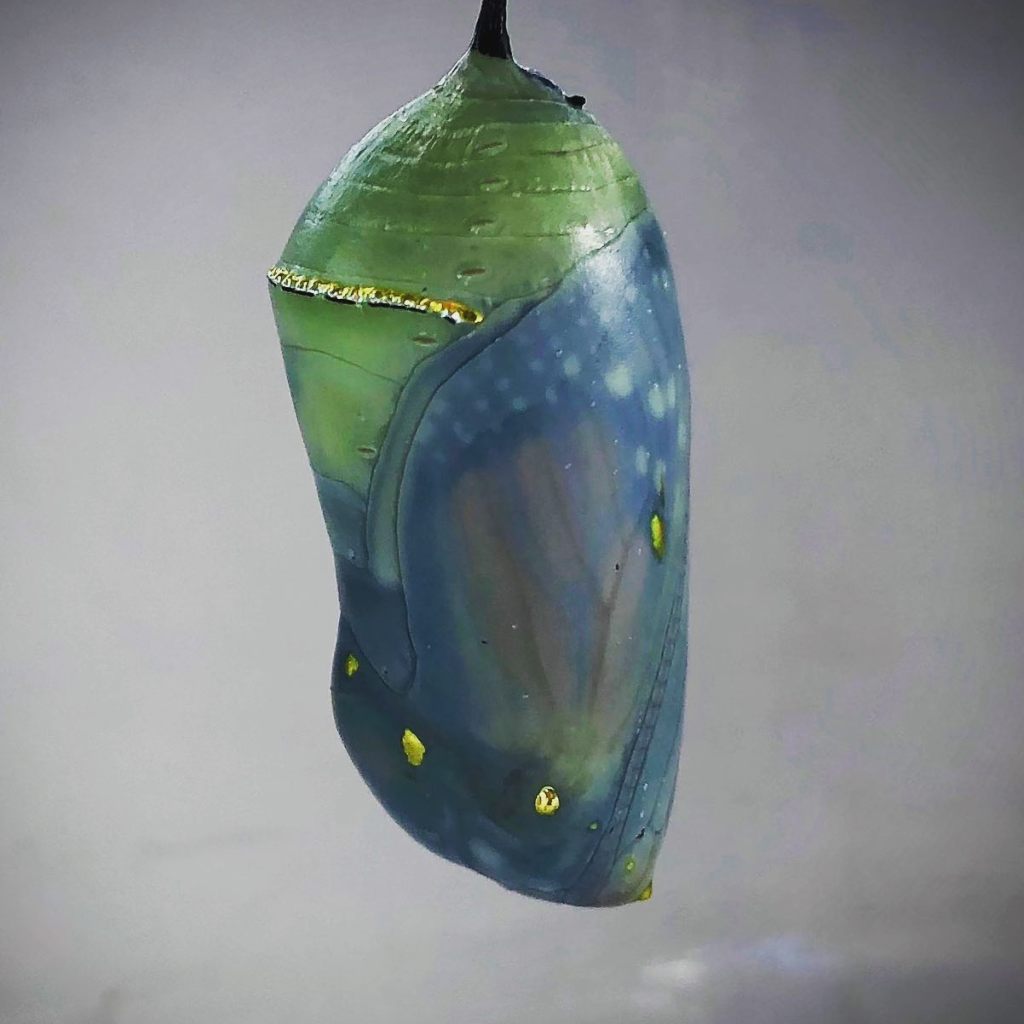
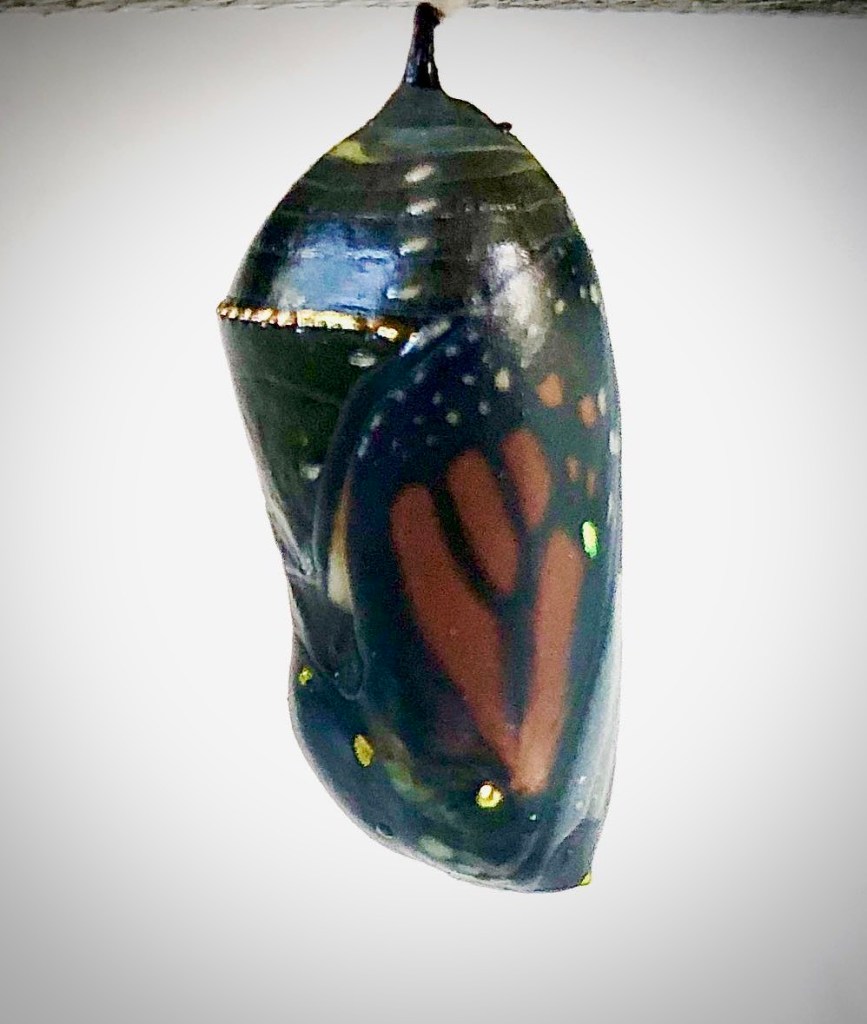
A few days after the first two chrysalises appeared, Kelly sent me another text message with yet another picture of her two charges. I had no idea that with time a small, silky, green chrysalis would become so amazingly beautiful.

Gold and Jewel Tones (Photo: Kelly Daab Green)

And…it would continue to change before the butterfly would break free and unfold its wings.

Almost Time to Break Free (Photo: Kelly Daab Green)

Like butterflies, we have the power to modify our own chrysalises. Yes, it’s true we’re still confined by limitations, but it is amazing the many ways we are finding to bring beauty, connection, and joy into our lives? We attend family gatherings over Zoom; we live stream theatre and comedy shows; we create virtual choirs; we visit friends at a distance of at least six feet; we spend time outdoors; and we use our eyes to smile at strangers over our masks.

Not all chrysalis hatch, you know. Sometimes they are destroyed or eaten or just don’t make it. Nothing is guaranteed. Let’s not wait for our wings. Our life is now.
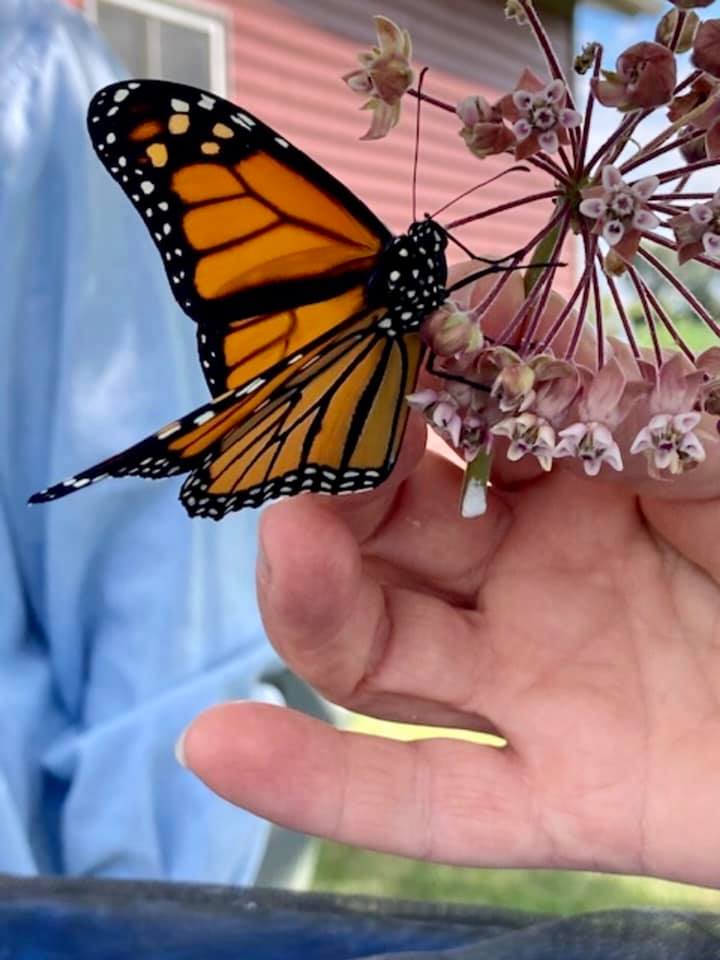
Before he took flight, the first glorious Monarch to emerge landed briefly on a milkweed blossom Kelly held in her hand. He paused for a few sips of nectar and a momentary fluttering of his wings in gratitude and affection…I think. Then knowing that he could…he flew away.
“Sweet freedom whispered in my ear, you’re a butterfly. And butterflies are free to fly. Fly away. High Away. Bye. Bye”

Bernie Taupin and Elton John, “Someone Saved My Life Tonight”
And Butterfly Are Free to Fly (Photo: Steve Forsgren)

A special thank you to my sister, Kelly Daab Green, for sharing her adventure with me and for allowing me to share it with you.

The Stars Shine Even in The Daytime

Recently, I was asked, “Where do you find beauty?” I didn’t answer right away, but thanks to stay-at-home orders I’ve had lots of time to ponder that question. It’s a good one, for I can think of no other time in my life when I needed the transcendent power of beauty more than in the last few months.  

“A world without beauty would be unbearable. Indeed, the subtle touches of beauty are what enable most people to survive”. 

John O’Donohue, Irish Priest and Poet

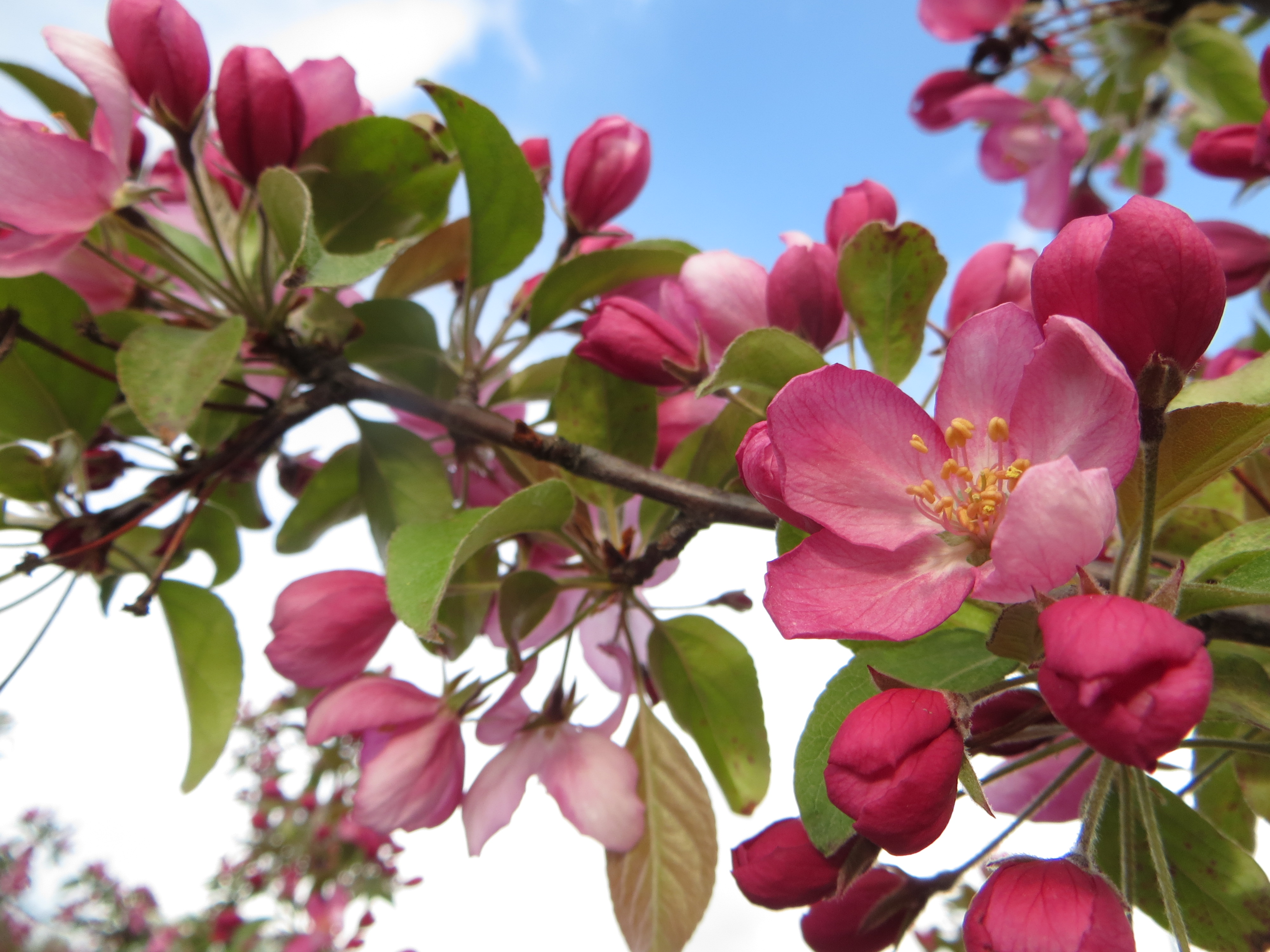
Everyone experiences shimmering moments of beauty that catch us off guard and take our breath away. We delight in moments that arrive without warning as suddenly as butterflies that spring from the grass on a summer afternoon or as gradually as blossoms that swell into apples.

When the ordinary suddenly becomes the extraordinary we are filled with wonder, awe, and a heightened awareness that the world around us is bursting with hidden beauty.  Beauty doesn’t save itself for special occasions but is already present in everything.

Beauty is so finely woven throughout our ordinary days that we hardly notice it.

John O’Donohue

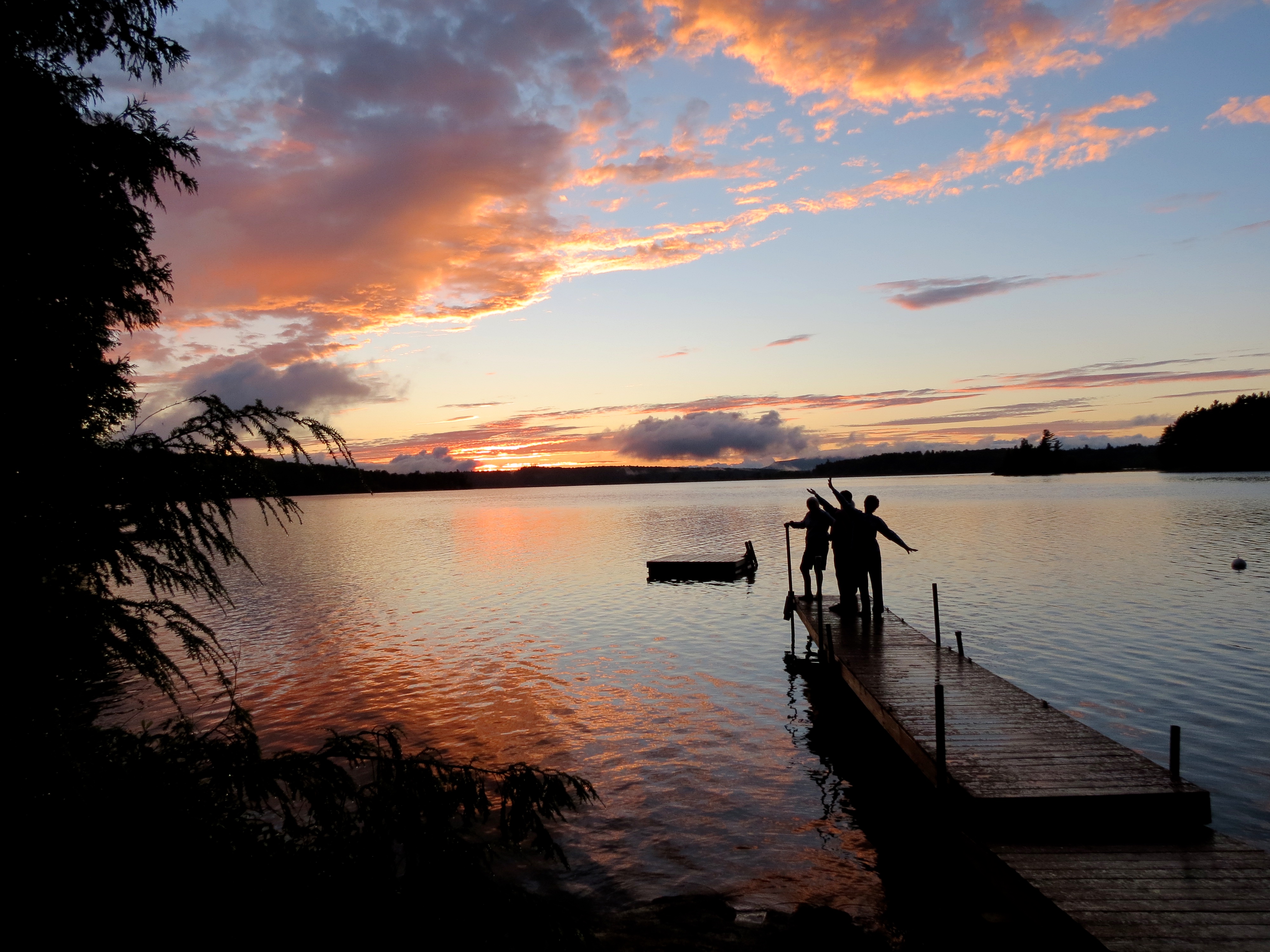
The colors of the sunset, the sound of wind through the trees, or the trust in a child’s eyes will be there whether we notice or not, and though we’re almost never aware of it the stars shine even in the daytime. It is up to each of us to pay attention, recognize, and appreciate the beauty that surrounds us. 

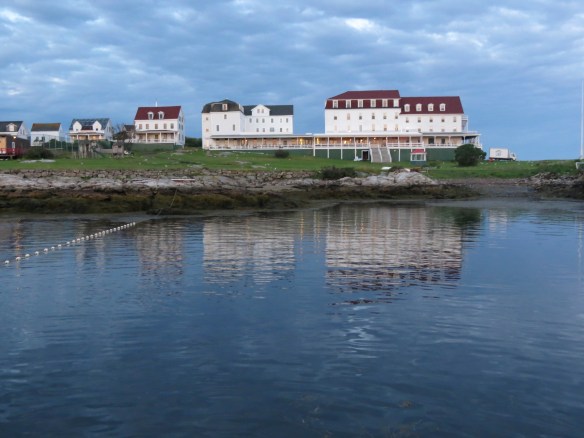
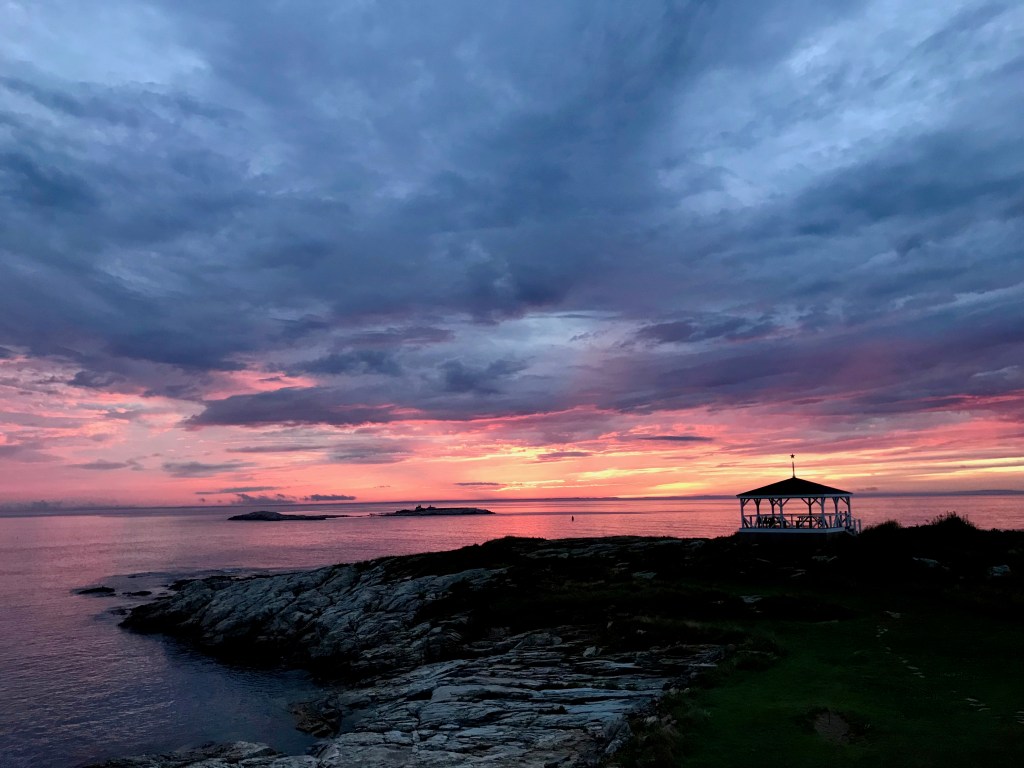
Reflections of Star Island, Isle of Shoal, NH

It was serendipity that brought me to my first photography workshop on Star Island off the coast of New Hampshire. I sat in the back of Sandpiper at the end of a long, narrow table, with my tiny Canon point- and-shoot tucked in my pocket trying to blend into a world of SLRs, tripods, and assorted lenses. Any notion that I actually belonged there didn’t last much longer than the first part of my first question.

“You know that button?  You know the one? The one you push to make things bigger…?”  

As if they were marionettes controlled by an invisible puppeteer a matched set of curly-headed New Yorkers sitting in the front of the room where the good students sit, turned in unison, and replied in a single voice filled with great incredulity.

 “Do you mean….the zoom?” 

“Yes,” I replied.”That would be the zoom.”

Apparently, zoom is a basic photography term. I knew immediately that I had somehow matriculated into a master’s class without taking the required prerequisites. The instructor and my fellow students…especially those two New Yorkers…were kind, extremely patient, and always willing to help, so I returned the next day and the next. I remained in the workshop for the entire week.

It was one of the best decisions of my life.  I have taken subsequent photography workshops where most often, I’m still the one with the most to learn. I continue to use a point-and-shoot camera…up-graded…but still rather basic and now, too, I use the camera on my phone. 

I delete many more shots than I keep and I miss more shots than I take, but I came away from that very first workshop with something much more valuable than learning the difference between aperture and speed, or how to set the ISO.  I learned to see. To really see the beauty that surrounds me every day.

“Everything that is made beautiful and fair and lovely is made for the eye of one who sees.”

Rumi

During that first workshop, I became very aware of light. “Find the source, see where it falls and place yourself and your subject in relation to it,” Caleb said. “ Move if you need to. Change the light. Direct the light.  Reflect the light.  Be the light.”

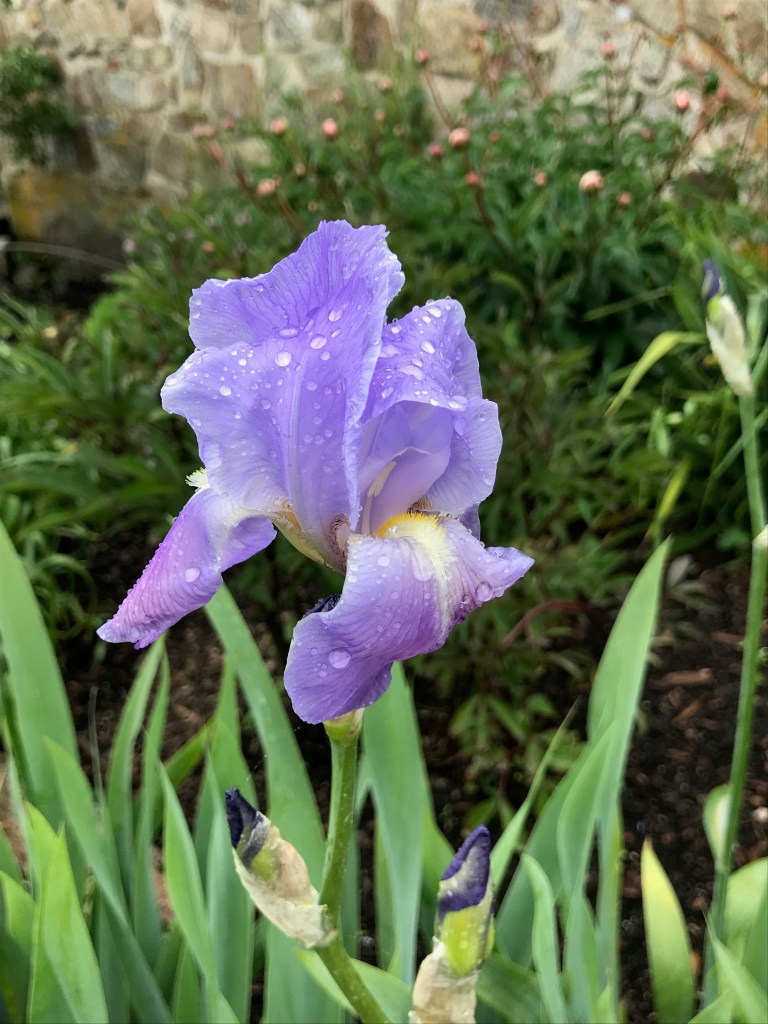
Neither my camera nor I am fast enough to capture everything I see, but now I notice the way the light reflects off the water and dances among the leaves at the edge of the river; I marvel at the way the sun shines through the delicate petals of the bearded iris that line my sister’s walkway, and I find much joy in the twice-daily golden hour that momentarily highlights the ordinary with opulent splendor.  Beauty is transient. It doesn’t wait or linger. We must be vigilant and observant. The brilliant sunset morphs and fades even as we watch; the final notes of the song once clear and crisp dissolve into the evening air, and the eagle soars overhead and then is gone.

A few years after I took that first photography workshop I joined a photography group at the local senior center. The facilitator was very fond of Wabi-Sabi, the philosophy that beauty can be found in the old, the everyday, and the imperfect. Wabi-sabi is seeing the beauty in the worn, well-used, weathered, and decaying. It is seeing beauty in common items and scenes often overlooked simply because it is not where you expect to find it. That philosophy opened my eyes even wider.  

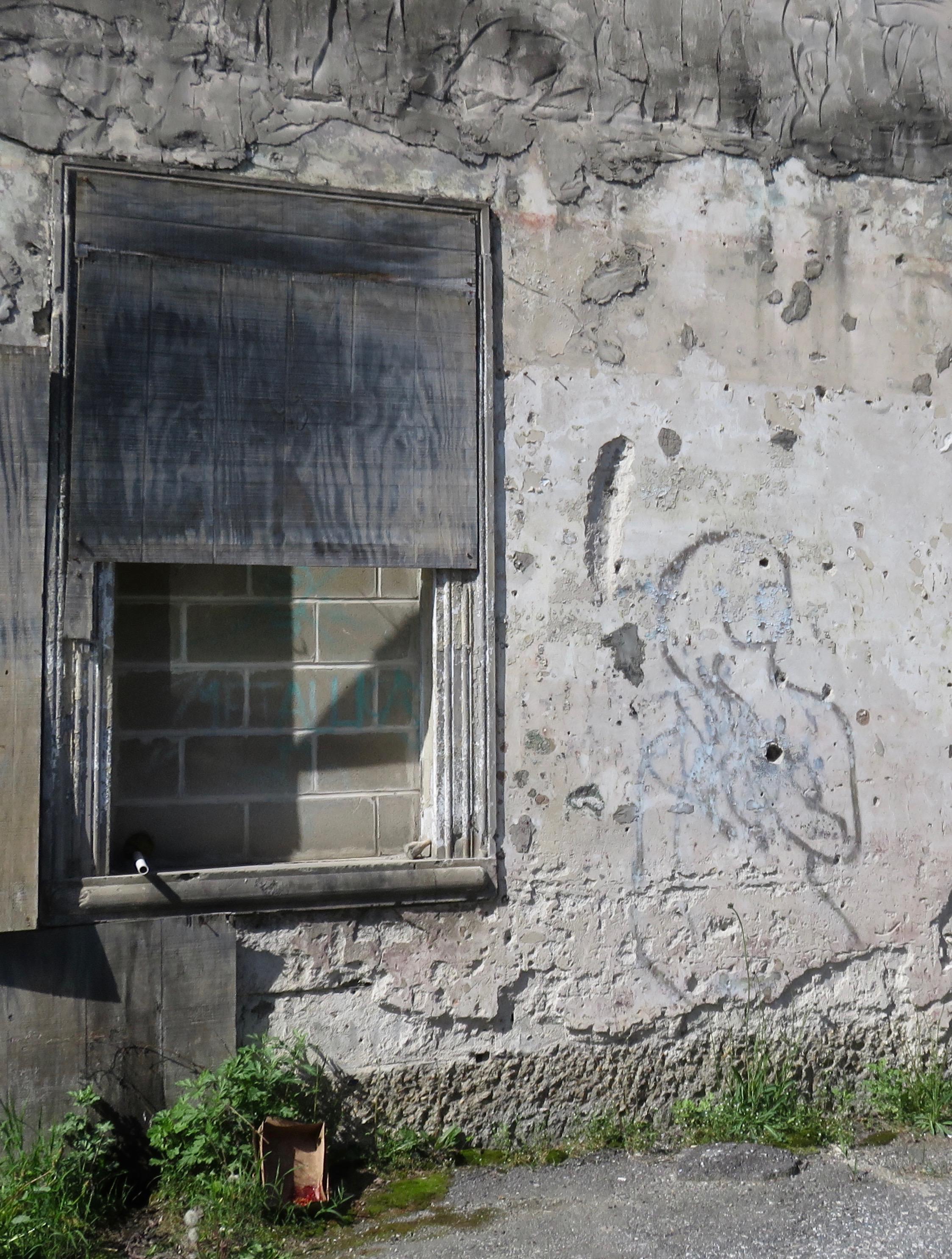
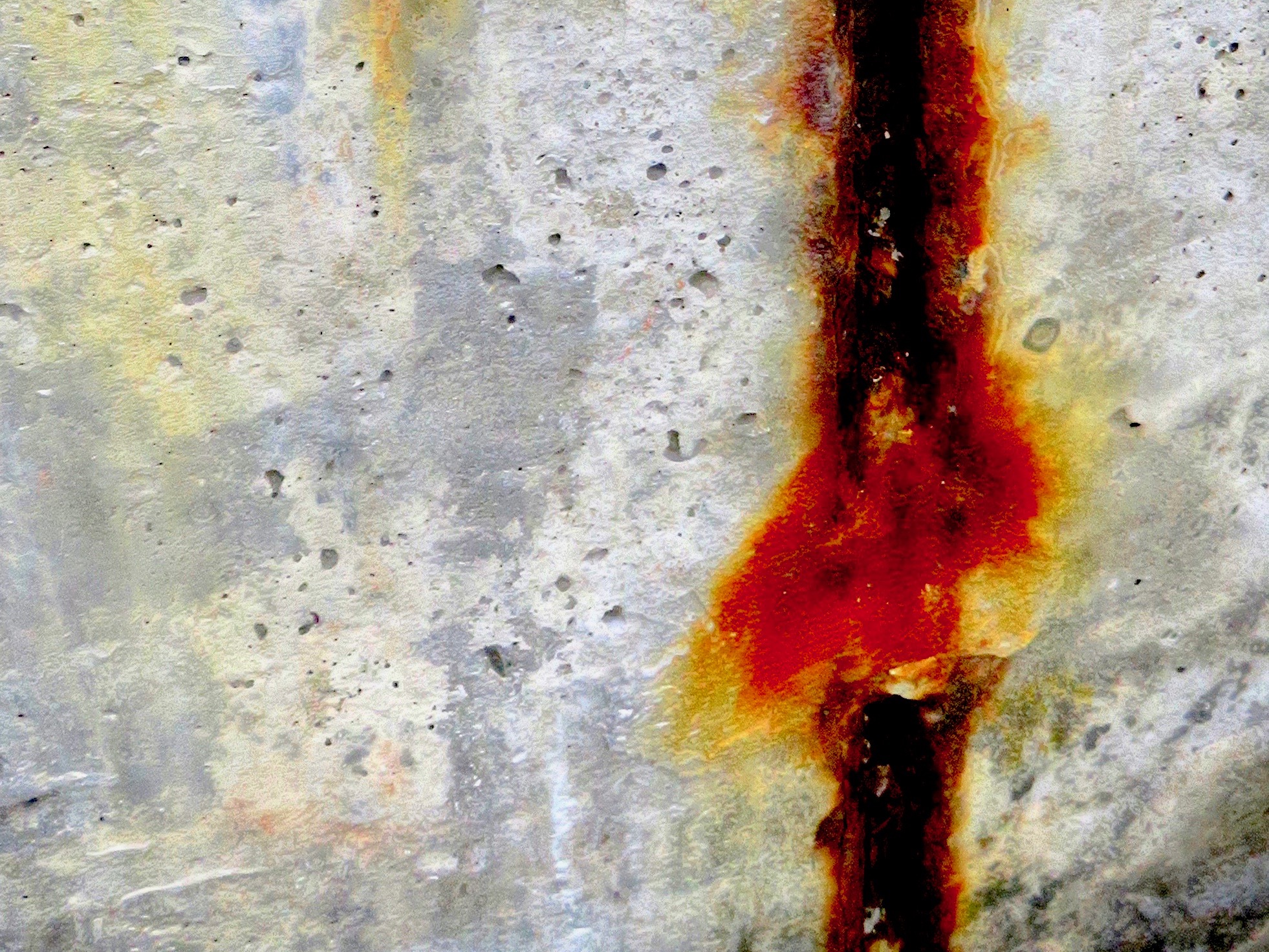
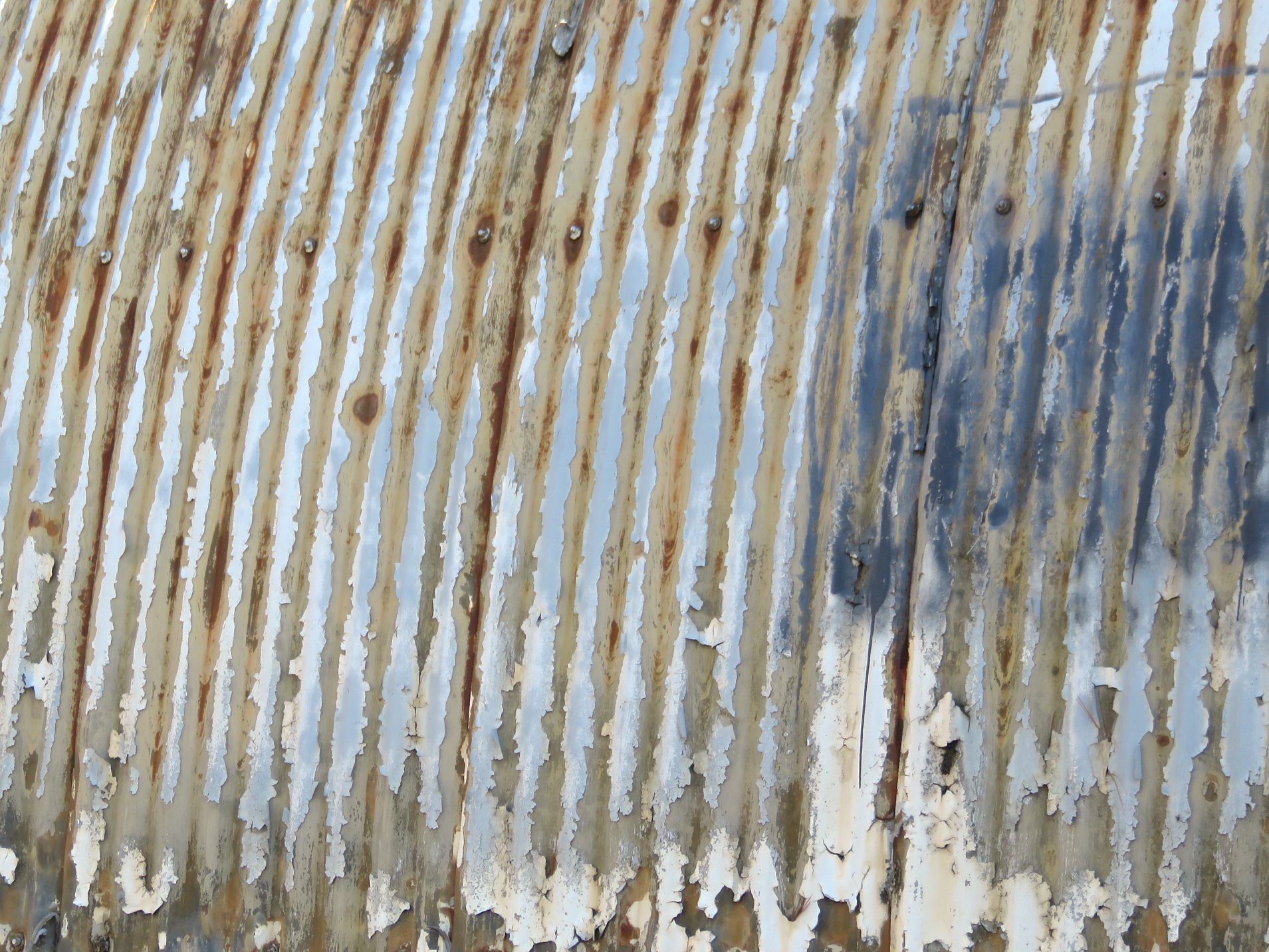
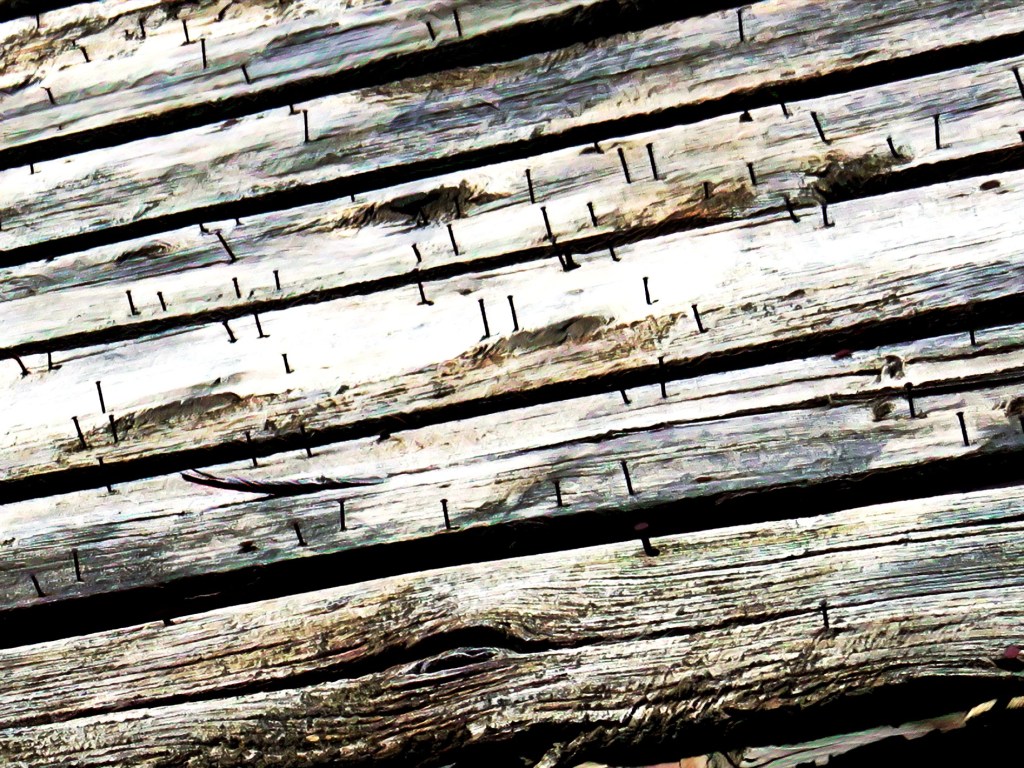
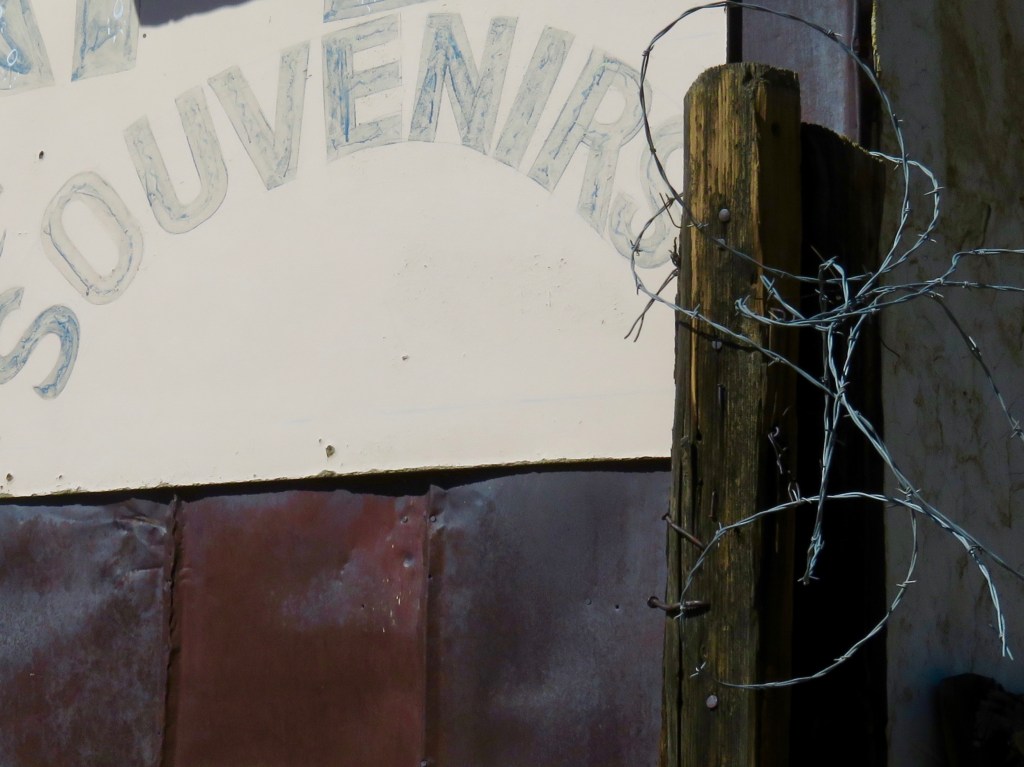
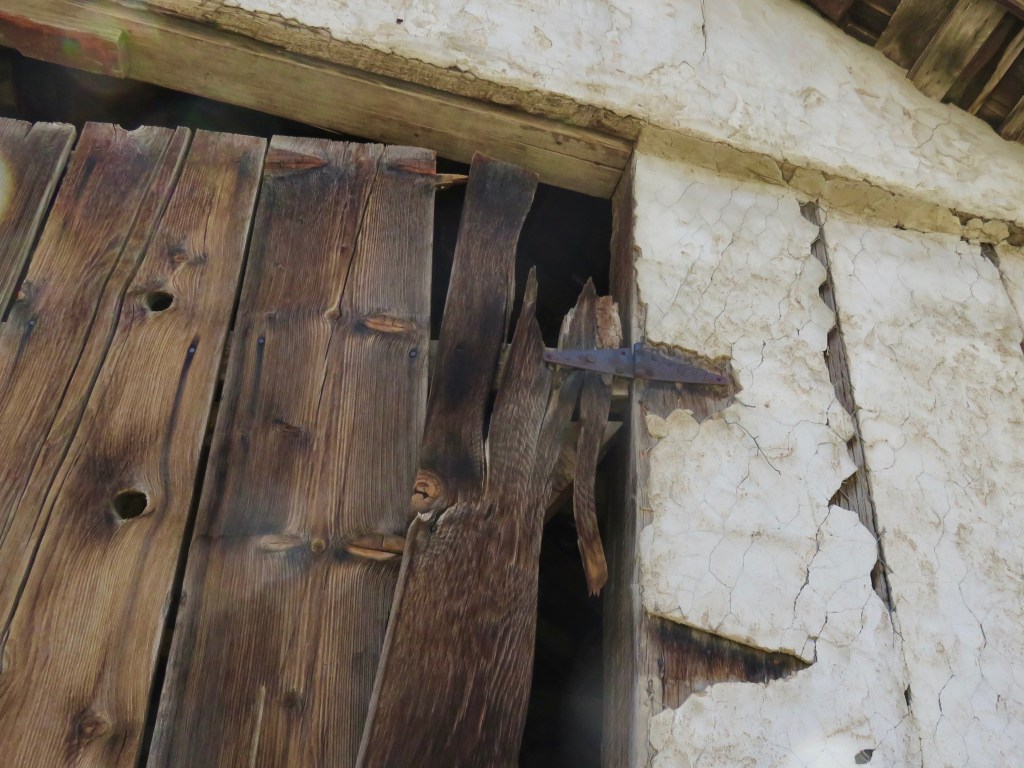
Shortly before his death, my husband and I spent four days in a ghost town outside of Arches National Park in Utah.  I brought my camera along on hikes in the park where I was amazed by the natural beauty of the awe-inspiring arches carved in the soft red sandstone by wind, weather, and time, but I was also able to appreciate the special kind of beauty that remained in the weathered boards, the chipped and faded paint and the sagging roofs of the once prosperous village in which we found ourselves.  Even in this place, I could still hear Caleb’s voice.  “Crop with your feet.” and paraphrasing Robert Capa…”If it’s not interesting, you’re not close enough”.  Through my lens, I saw the roofs now naked and shingle-less, and the abstract perfection of the staunch and upright nails who still remained at attention with no other purpose than to be beautiful. Streaks of rust from broken hinges, garden gates covered with vines, shattered glass, and tattered curtains also revealed their unique beauty.  What a blessing to be able to appreciate the wonder of such a place. 

Even in this strange time of physical distancing and self-isolation, we are discovering the beauty that has been hiding in plain sight…the light that turns the neighborhood windows to gold at twilight, the still life created by groceries on the kitchen counter, the smiling eyes that look back at us across a homemade mask. We dance, we sing, we write words on the page, we add paint to a canvas, we capture light through a lens, we rearrange pieces of broken plates, we read, we walk in the park, we sew masks, and we bake loaves of bread. I believe our need for the beautiful…and the compulsion to create it…has enabled us to endure this challenging time of the pandemic.

“Life is amazing. And then it’s awful. And then it’s amazing again. And in between the amazing and awful, it’s ordinary and mundane and routine. Breathe in the amazing, hold on through the awful, and relax and exhale during the ordinary. That’s just living heartbreaking, soul-healing, amazing, awful, ordinary life. And it’s breathtakingly beautiful

L.R.Knost

Learning to see the beauty of the world isn’t the only lesson taught in those photography workshops.  For if you didn’t notice, the rules that Caleb taught me are also lessons for how to live in this world as well. Find the source of light…the source of love…the source of that which you call holy… and place yourself in relation to it.  Move if you need to. Change the light. Direct the light. Reflect the light.  Be the light and kindle the flame for another when their light flickers in the storms of life.   Wabi-Sabi entreats us to see the beauty, the wisdom, and the divine in people who are broken, tired, old, and worn, as well as in objects or buildings and if they’re not interesting we’re not close enough.  Crop with your feet. 

“Where do you find beauty?” he asked.

“Everywhere,” I replied, with a smile. “Everywhere!”

Originally shared as part of a chapel service during Virtual Star Arts Retreat. Star Island, Isle of Shoals, NH

June 26, 2020